 Kotor City Guide
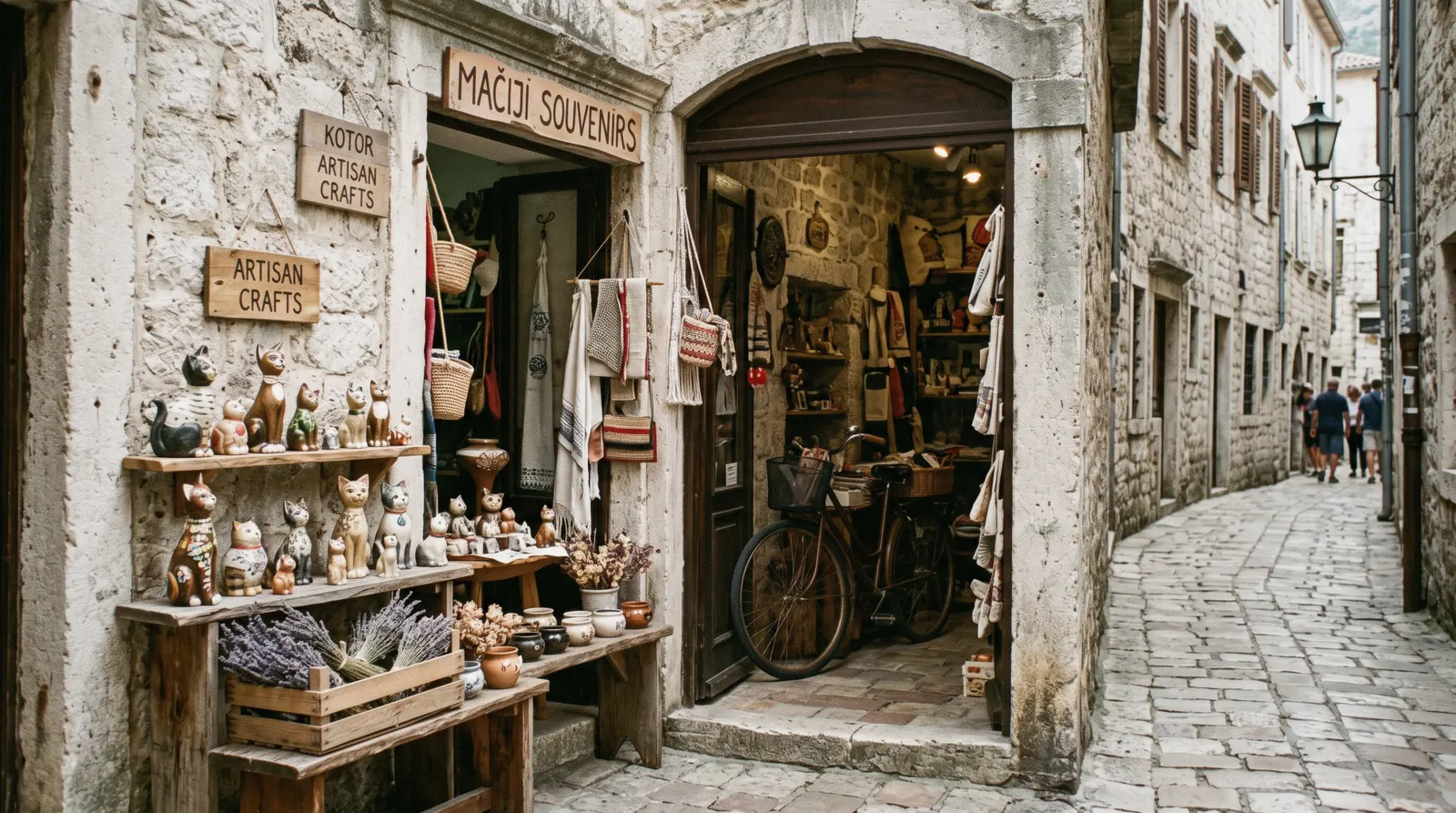
Shopping in Kotor: Cats, Lavender and the Local Pantry
Kotor shopping is a small-town affair, and that is the point. The walled town holds a few hundred metres of lanes, the shops are independently run, and the goods repeat in a friendly rhythm: cat figurines, lavender, olive wood, and jars of the mountain pantry. This page tells you what is actually worth carrying home, where the shops cluster, when the lanes are unbearable, and what nobody can honestly tell you in advance, which is the price of anything.
Quick answer The answer first, then the details that decide it
Buy three things in Kotor and you have covered the town. First, a cat souvenir, because the cat is Kotor's civic symbol and the cat shops are the town's signature craft. Second, lavender or an olive-wood piece, the two other staples of the old town lanes. Third, something from the pantry: Njeguški pršut, Njeguši cheese, honey or honey brandy, the dried and cured goods of the mountain above the bay. Shop the lanes early or late, because the same streets fill with cruise passengers on ship days. Prices are not published anywhere official, so compare in person and pay in euros, the currency Montenegro uses unilaterally.
Key takeaways
- Signature buy: cat figurines, the town's own symbol, covered on the cats of Kotor page
- Pantry gifts: pršut, Njeguši cheese, honey and honey brandy, tasted on the Kotor food tour
- Where: the lanes between the Sea Gate, Arms Square and the cathedral, mapped on the old town guide
The Cat Is the Souvenir
Understand the cat and you understand shopping in Kotor. The animal is a civic symbol: the town keeps a cat museum inside the walls, a Cats' Square (Trg od mačaka) right by the Sea Gate, feeding stations among the lanes, and a charity called Kotor Kitties that runs spay-and-neuter work for the resident population. The shops followed the symbol. Cat figurines and cat-themed goods are the town's signature craft, sold from small independent shops along the old town lanes. You will see cats painted, carved, printed and stuffed into every format a souvenir can take.
A practical word. No official craft register exists for Kotor, so this guide names no individual shop. That is not coyness, it is the honest limit of what can be verified. What we can say is the geography: the cat shops cluster in the small lanes between the Sea Gate and the cathedral, and a browsing loop of half an hour covers all of them. If you want to meet the real animals before you buy their portraits, our guide to the cats of Kotor covers the square, the museum and the feeding stations.
Lavender, Olive Wood and the Craft Staples
Alongside the cats, two materials dominate the shelves: lavender and olive wood. Lavender arrives dried, in sachets, soaps and oils, and it packs flat, which makes it the easiest gift on this page to fit in a suitcase. Olive wood turns up as spoons, boards, bowls and small carved pieces, and it is the buy with the most weight and the most character.
The same rule applies here as with the cats: the goods repeat from shop to shop, the sellers are independent, and no published price list exists for any of them. Handle the wood pieces before you buy. Olive wood is dense and should feel heavy for its size, and the grain differs from piece to piece, so two spoons from the same shelf are never identical. English is widely spoken in the old town, so questions about where a piece was made get answers. The tourist info point by the Sea Gate and on Arms Square can help with anything the shops cannot.
The Pantry: Pršut, Cheese, Honey and Wine
The best shopping in Kotor is edible. The mountain village of Njeguši, up the old serpentine road above the bay, gives its name to the bay's two famous foods: Njeguški pršut, a dry-cured, wood-smoked ham aged in the village's mountain air, and Njeguši cheese, served with it. Add honey and medovača, the honey brandy the taverns pour, and a bottle of local wine, and you have the full pantry of the bay's kitchen.
These goods reach the old town shops as vacuum-packed ham, waxed cheeses and jars, which travel far better than the fresh versions. If you want to taste before you buy, two routes exist. Family taverns in Njeguši itself run tastings on the main road, a half-day trip over the serpentine covered in our Njeguši guide. Closer to hand, the Kotor food tour with a local guide walks you through the same products in three hours, and the food pages on this site cover the whole eating picture in our where to eat guide. For a full picture of what the taverns cook, see our best restaurants page.
Where the Shops Are: A Geography of the Lanes
Shopping in Kotor needs no map app, only a shape in your head. The cruise pier sits about 100 m from the walls, and passengers walk two to five minutes to the Sea Gate, the old town's main western entrance, built in 1555. Through the gate you land on the Square of Arms, the town's main square, with its Clock Tower of 1602 leaning slightly back toward the water.
From the Square of Arms the shopping lanes run inward in a tight grid of narrow stone streets. The cluster that matters runs from the square toward St Tryphon's Cathedral, consecrated in 1166, with the cat shops and craft stalls thick in the small lanes between. The Cats' Square by the Sea Gate marks the other anchor. Only about 1,360 people live inside the walls, so the whole shoppable town is a fifteen-minute walk corner to corner. If you want the squares and churches plotted precisely, our Kotor map page carries the pins, and the old town guide walks the streets in order. The cathedral page covers the building at the centre of it all, admission about €4 ($4.56).
Cruise Days and the Art of Shopping Around the Crowd
Timing is the one variable that changes shopping in Kotor more than anything else. The port calls itself the third cruise destination in the Adriatic after Venice and Dubrovnik, with about 523 calls from roughly 85 ships scheduled for 2026, about 41 of them in September alone. The practical safety story in town is crowds, not crime: on two-ship days the lanes and their shops pack tight from late morning through mid-afternoon.
The fix is arithmetic, not luck. Shop before the first ship's walkers arrive, which means roughly the first hour after the shops open, or after the last afternoon gangway call. Evening shopping has a bonus: the lanes stay busy in July and August but pleasantly so, and the fortress switchbacks above town are lit by small warm lights. If your whole visit falls on a heavy ship day, our cruise port page explains the schedule patterns, and the rainy day guide and free things to do page hold plans for the hours you would rather not spend queuing behind a tour group in a three-metre-wide street.
What Nobody Publishes: Prices
No official price list exists for any shop in Kotor, and no register of vendors is published by the town. That matters for you in two ways. First, any guide that prints exact souvenir prices for Kotor is guessing, because the shops are independent and price by hand. Second, comparison is on you. The same cat figurine, lavender sachet or olive-wood board can differ in price between two shops on the same lane, so the only honest method is to look at three before you buy.
The currency side is simpler. Montenegro uses the euro unilaterally, though it is not a eurozone member, so the notes and coins in your pocket are standard and no conversion is needed inside the country. For the cost picture around your whole trip, our Kotor costs page covers the fixed items, from the €1.00 per night residence tax to the €15 ($17.12) walls ticket.
| Verified cost item | Price |
|---|---|
| Residence tax, per person per night | €1.00 ($1.14) |
| City walls ticket, main season | €15 ($17.12) |
| St Tryphon's Cathedral admission | about €4 ($4.56) |
| Maritime Museum admission | €4 ($4.56) |
| Food tour, three hours, private | US$163.05, platform bills in your own currency |
What to Buy, Traveller by Traveller
The right buy depends on the bag, the flight and the person. The table below sorts the town's staples by the traveller carrying them. Every row is a category the shops genuinely stock.
The pantry row is the one with the shortest shelf logic: vacuum-packed pršut and sealed honey travel well, fresh cheese does not.
| Traveller | Best buy | Why it works |
|---|---|---|
| The one with the small suitcase | Lavender sachets or soap | Flat, light, no customs drama, smells like the trip for months |
| The food lover | Vacuum-packed Njeguški pršut and honey brandy | The bay's two signature tastes, both travel-safe sealed |
| The house-proud | An olive-wood board or bowl | Heavy, grained, one of a kind, the buy with the most weight |
| The child in your group | A cat figurine | The town's own symbol, cheap enough to be a real decision |
| The hard-to-buy-for | A wine bottle from the pantry shelf | Local, packable in checked luggage, no published price to argue with |
Taste Before You Buy
One tour belongs on this page, because it is the fastest way to learn which pantry goods are worth your money. It is private, it feeds you dinner, and it is the most expensive three hours on this site for a reason.
 from $163.05
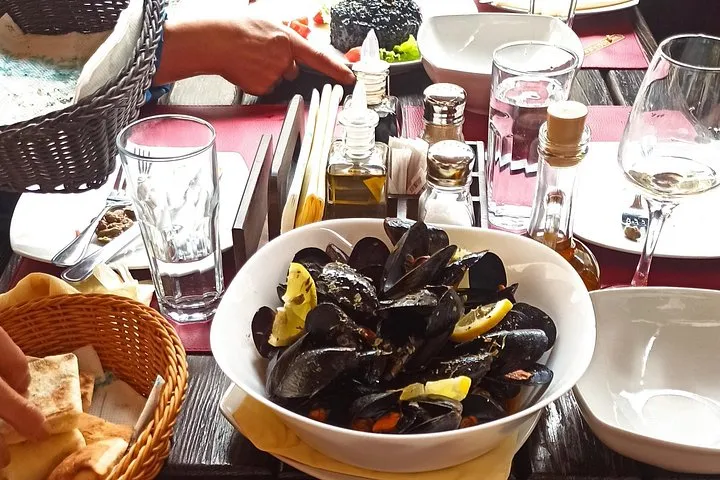
Kotor food tour with a local guide
The most expensive three hours on this site and the only one that feeds you dinner. Run by the operator Rick Steves sends people to. The route reads as a tasting menu of the bay's kitchen, from cured ham to honey brandy.
Check AvailabilityPrices, ratings and details are the platform's own. Dollar figures are the listed prices. The platform bills in your account's currency.
Near the Shops
Shopping in Kotor sits inside a half-day of other things. The walls climb starts by the Sea Gate, the cable car rides from Dub above Škaljari, and the food pages cover the taverns. Keep these open as you plan.
- Walking the walled town is free and takes a half-day: our old town guide orders the streets
- The fortress climb is 1,350 steps and €15 ($17.12) in the main season, best before you carry shopping bags
- The things to do hub holds everything else a shop day can grow into
- Eating around the shops: the where to eat hub and the tavernas of the best restaurants page
- If a purchase needs a night's storage, the where to stay hub sorts the areas, with our hotels page for inside the walls
Shopping in Kotor: Questions
What souvenirs should I buy in Kotor?
Three categories cover the town. Cat figurines and cat-themed goods are the signature craft, because the cat is Kotor's civic symbol. Lavender and olive-wood pieces are the other staples of the old town lanes. For something edible, look for vacuum-packed Njeguški pršut, Njeguši cheese, honey and local wine.
Where are the shops in Kotor old town?
They cluster in the narrow lanes between the Sea Gate, the Square of Arms and St Tryphon's Cathedral. The Cats' Square sits right by the Sea Gate. The whole shoppable town is a fifteen-minute walk corner to corner, and only about 1,360 people live inside the walls.
Can you buy Njegusi prsut in Kotor?
Yes, as vacuum-packed ham on pantry shelves in the old town shops, which travels far better than fresh. To taste it at the source, the family taverns in Njeguši village up the serpentine road run tastings. The three-hour food tour from the Sea Gate covers pršut, cheese, wine and honey brandy in one walk.
Is shopping in Kotor expensive?
Nobody publishes a price list, so no honest fixed answer exists. The shops are independent and the same goods differ in price between neighbouring lanes, so compare three before buying. Montenegro uses the euro, so there is no currency friction. The verified costs around your trip, like the €15 walls ticket, sit on our costs page.
What is Kotor famous for making?
Cat figurines and cat-themed souvenirs are the town's signature craft. Lavender goods and olive-wood pieces are the other staples. In the kitchen, the bay is known for Njeguški pršut, the dry-cured wood-smoked ham aged in the mountain air above Kotor, and for honey brandy.
When is the best time to shop in Kotor?
Early morning or evening. About 523 cruise calls are scheduled for 2026, and on two-ship days the lanes pack from late morning to mid-afternoon. Evening shopping in July and August comes with the fortress walls lit above the town.
Prices, hours and terms are set by the venue or operator and confirmed at checkout.
We may earn a commission if you book through one of our links, at no extra cost to you. Full affiliate disclosure