 Kotor City Guide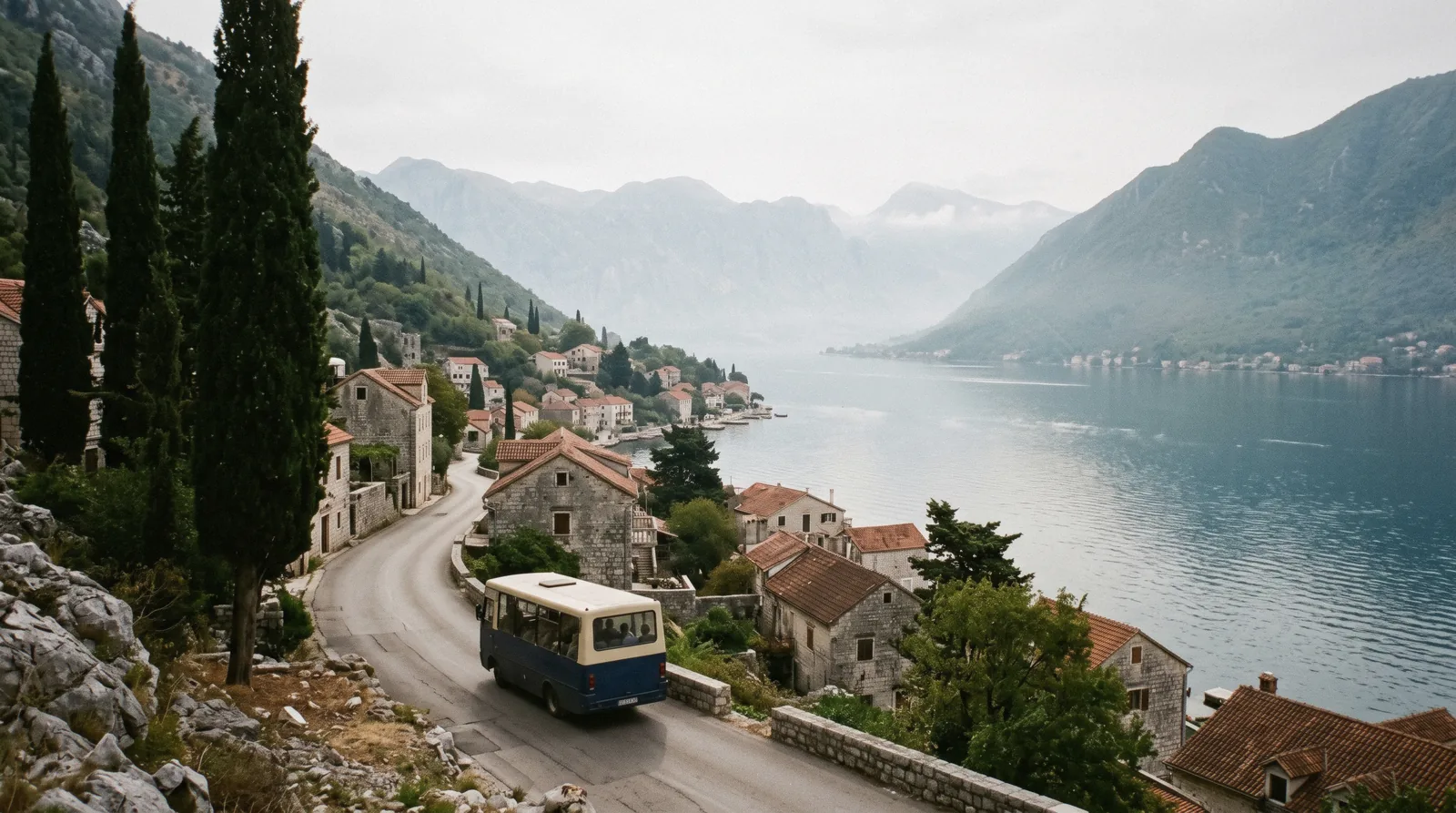
Getting Around Kotor: On Foot, by Bus, by Gondola
Getting around Kotor is a three-vehicle question: your feet, the bus and the gondola. Kotor answers the getting-around question in three layers. Inside the walls you walk, because you have no choice. Around the bay you take the local buses that leave from the bus station by the sea, or a taxi, or a boat. Above the town you ride, either the hop-on bus over the serpentine hairpins or the cable car gondola to the Krstac ridge. This page prices and routes all three layers and hands you off to the pages that own each destination in depth. One currency note before we start: Montenegro uses the euro unilaterally and is not a eurozone member, so prices on the ground are in euros even though the tour platform bills in your own currency. The full guide lives on Kotor City Guide.
Quick answer The answer first, then the details that decide it
You do not need a car in Kotor itself. The old town is fully pedestrian and every sight inside the walls sits within a few minutes of the Sea Gate. For the bay villages, local buses leave from the bus station by the sea. For the viewpoints above town, take the Kotor hop-on hop-off bus with walking tour or the cable car. For Njeguši, Cetinje and Lovćen in one day, a rental car is what opens the map, and our Kotor car rental page covers that decision. Nobody official publishes a fare table for the local buses or the taxis in Kotor. We looked. That gap is a finding in itself and it shapes how you should budget, so we deal with it honestly in each section below rather than printing numbers nobody stands behind.
Key takeaways
- Things to do: the page that owns this question is at Things to do.
- Plan: the page that owns this question is at Plan.
- The full guide lives on Kotor City Guide.
The Pedestrian Town: Everything Inside the Walls on Foot
Kotor's old town is fully pedestrian. Cars park at lots outside the walls and stay there. This is not a design choice made for tourists, it is simply the shape of a walled town of narrow stone lanes built long before vehicles.
Why walking is the only way
The walled town is small. Only about 1,360 people live inside the old town itself, counted in the 2023 census, while Dobrota counts 7,345 and Škaljari 3,342 and the wider urban area approaches 13,000. The town you picture when you picture Kotor is the small part.
Walk in through the Sea Gate, built in 1555 in the Venetian era, and you are on the Square of Arms within a minute, with the baroque Clock Tower of 1602 leaning slightly toward you and a medieval pillory in front of it. St Tryphon's Cathedral, consecrated in 1166, the Maritime Museum in the Grgurina palace, St Luke's church of 1195 and the Cats' Square all sit inside the same tight lattice of lanes. Venice ruled Kotor from 1420 to 1797 and laid out the town you walk today, and the walls above it run about 4.5 km with sections up to 20 m high.
The whole ensemble has been on the UNESCO World Heritage list since 1979. English is widely spoken in the old town, and the tourist info point sits by the Sea Gate and on Arms Square if you want a paper map. Our Kotor old town page walks the lanes stop by stop, and the things to do in Kotor hub lists everything ticketed.
Walking the town itself is free. The ticketed sights are the walls at €15 ($17.12) in the main season, the cathedral at about €4 ($4.56) and the Maritime Museum at €4 ($4.56).
Where walkers go next
Three walking routes leave the pedestrian zone and each has its own page. The city walls climb about 1,350 stone steps and roughly 280 m to San Giovanni fortress, 45 to 60 minutes up, covered in our Kotor fortress guide. The free alternative is the Ladder of Kotor, the Austro-Hungarian zigzag path with about 70 switchbacks up to the Krstac pass at about 940 m, which starts near Tabacina and connects with the walled path above the walls gate.
And the flat option is the waterfront path north toward Dobrota, where swimming happens off stone slabs and quays because Kotor town itself has no sandy beach. Cruise passengers arrive into this same walking network. The pier sits about 100 m from the old town walls and passengers walk 2 to 5 minutes to the Sea Gate, which our Kotor cruise port page details.
If the lanes feel confusing at first, our Kotor map page gives you the layout on one screen.
Kotor Bus Station and the Bay Lines
Local buses along the bay leave from the bus station by the sea, a short walk from the old town. This is your public transport for Perast, Dobrota and the coast road toward Budva and Herceg Novi.
The station and how it works
The bus station sits by the sea at the edge of town, close enough to the walls that you walk to it with luggage in minutes. Buses along the bay line the coast road in both directions. Northbound they serve the string of bay towns, Kotor, Risan, Perast, and on toward Herceg Novi.
The bay itself is a ria about 28 km long with a shoreline of 107.3 km, so the coast road is long and the bus is the slow but real way to see it. Southbound the same station puts you on the Adriatic highway toward Budva, a short coast-road run with buses through the day. Our Kotor to Budva page covers that run and our Perast page covers the northbound trip.
For the long-haul border crossing from Croatia, our Dubrovnik to Kotor page explains the 2 to 2.5 hour bus ride off-season and the summer queues that can add 30 minutes to 3 hours at the Debeli Brijeg border.
The fare question nobody answers
Here is the negative finding, stated plainly. No official bus fare table for Kotor's local lines was found in our research, and we will not print a number just to fill the cell. What this means practically is that you pay the driver in euros, in small notes and coins, and the amount for a bay-village hop is small.
The alternative listed by tour operators for the same route is that local buses cover the bay towns for a few euros each way, which is as close to a published figure as any operator source comes. Montenegro runs on the euro unilaterally, so no currency exchange is needed at the bus door. If a precise fare matters to your budget, ask at the tourist info point by the Sea Gate, where staff speak English, or check our Kotor costs page for how transport fits into the daily total.
Anyone who quotes you an exact cent figure for the Kotor bus lines is guessing.
Getting to Perast without a tour
Perast is 12 km from Kotor by the coast road and the local bus is the budget way there. The bus drops you on the main road above the village and you walk down to the quay. From the quay, water taxis run to Our Lady of the Rocks for about €5 ($5.71) return, with up to €10 ($11.41) reported in the season.
The island church-museum charges €3-5 ($3.42-$5.71) in cash, and since April 1, 2026 the island admission is €5 ($5.71) per guest per operator notices. A dress code applies on the island, no swimwear and shoulders covered. If the bus timetable does not suit, the Kotor to Perast and Our Lady of the Rocks boat tour runs the bay cruise version from the water side, and the Boka Bay full-day guided cruise with swim stop loops the whole fjord from Tivat or Kotor in eight hours.
Our Our Lady of the Rocks page holds the full island story, from the icon legend of 1452 to the fašinada procession that throws stones at the island every 22 July.
Kotor Taxi: Ranks, Hotel Desks and the Ride-Hailing Gap
Taxis in Kotor are a rank and a negotiation, not an app. Here is how to use them well and what we cannot tell you.
Where taxis wait and how they price
Taxis in Kotor work from ranks by the old town and the bus station, and from hotel desks if you are staying at one. English is widely spoken in town, so stating a destination is rarely a problem. The one taxi fare that appears in our sourced material is the run from town up to the cable car lower station at Dub above Škaljari, where taxis charge about €20 ($22.82) each way according to operator and review reports.
Beyond that, no official source publishes taxi fares for Kotor. We state that rather than invent a tariff table. The practical habits that serve you anywhere in the bay apply here, agree the price or confirm the meter before the doors close, carry euro cash in small notes, and note that the same €20 ballpark that covers the Dub run tells you the scale of in-town and short-hop pricing.
For fixed, booked-ahead pricing the airport transfer exists as a product, covered next.
Ride-hailing and the airport run
Our sourced material documents no ride-hailing service operating in Kotor, and we make no claim either way about apps beyond that. What is documented is the airport transfer product and the airport geography. Tivat Airport is about 5 km from Kotor, so the arrival run is short. The Montenegro airport transfer to Kotor and the bay is a private meet-and-greet in a V-class van, priced per vehicle for up to 8 passengers at US$66.38, with a name sign in arrivals and flight tracking included.
Priced per vehicle it divides well for three or more travellers, and it covers Podgorica Airport too, which sits about 65 km from Kotor and runs about 1h25 to 1h40 by transfer. Our Tivat airport and Podgorica airport pages carry the airline and logistics detail.
The Hop-On Bus to the Serpentine Viewpoints
The hairpin road above Kotor carries the best views of the bay and the worst driving stress. The hop-on bus takes the driving out of it.
What the ticket buys
The Kotor hop-on hop-off bus with walking tour sells for US$32, valid for one day, and the platform bills in your own currency. Buses run every 20 to 25 minutes depending on traffic and run the whole day once activated, climbing the serpentine viewpoints above town so you can hop off for photos and rejoin a later bus. The ticket folds in a free guided old-town walk plus discounts in town, 50 percent off the Maritime Museum and 30 percent off the Our Lady of the Rocks boat.
The meeting point is the Port of Kotor on the E65, next to the cruise terminal, so it is an easy walk from the Sea Gate. The operator is Hop-on Hop-off Kotor Sightseeing tour, the rating stands at 4.2 from 212 reviews on GetYourGuide, and cancellation is free up to 24 hours before the start. It is not suitable for babies under 1 year or for pregnant women.
The road it rides
The serpentine above Kotor was built 1881 to 1884 under Austria-Hungary as a wagon and military route over Lovćen to Cetinje. It carries 25 numbered 180-degree hairpins plus about 75 further turns, and driving it yourself takes 30 to 45 minutes from Kotor to hairpin 25. The hop-on bus lets you look at the drops instead of the road.
If you want the full mountain day, the Lovćen cable car, Njeguši and Cetinje day tour links the gondola ridge, Njeguši village and the old royal capital in seven and a half hours, and the Great Montenegro tour with Lovćen, mausoleum and Sveti Stefan adds the mausoleum and the coast in eleven. The serpentine continues past Njeguši village, where family taverns run tastings of Njeguški pršut, the dry-cured wood-smoked ham aged in the mountain air, served with Njeguši cheese. Our Njeguši, Lovćen National Park and Cetinje pages pick the route up where the bus turns back.
For the views from the top, our best views of Kotor page ranks the vantage points.
The Cable Car as Transport
The gondola is a sightseeing ride first, but it functions as the fastest road-free crossing from the edge of town to the Krstac ridge, and one-way tickets make it usable as a genuine link in a route.
Fares, hours and the ride
The official fares, from the Kotor Cable Car operator itself, are these. Return €25 ($28.53) for an adult, €7 ($7.99) for a child aged 2 to 12, €12 ($13.69) for disabled visitors. One-way €14 ($15.98) for an adult, €4 ($4.56) for a child.
Hours run 09:00 to 20:00, from 10:30 on Tuesdays, with the last ride up at 19:30 and the last down at 20:00. The ride itself takes 11 minutes. The lower station sits at Dub above Škaljari, which is why the taxi run from town costs about €20 ($22.82) each way, and the hop-on bus and tours reach it by road as well.
The one-way ticket is the transport-minded choice, ride up and continue on foot or by bike. The official route down on foot connects with the Ladder of Kotor toward the Krstac pass at about 940 m, and cyclists take the same logic downhill, which is exactly what the Lovćen 25-turns downhill bike ride with cable car ascent sells as a four-hour guided or self-guided descent. Our Kotor cable car page carries the full detail.
At the top station and the wind problem
The top station is a small amusement zone on the Lovćen flank. The Alpine Coaster costs €12 ($13.69) on a 1,056 m track of 3 to 5 minutes, the Falcon Fly zipline-coaster costs €15 ($17.12) at 30 km/h, and the Aerobar costs €15 ($17.12) for adults and €5 ($5.71) for children. Online tickets skip the line.
Two cautions matter for planning. The gondola closes for wind or maintenance with little notice, so check same-day status before you build a day around it, and the mausoleum at the Lovćen summit is a separate proposition inside the national park beyond the ridge. The Njegoš Mausoleum charges €8 ($9.13) for adults and €4 ($4.56) for children and students on recent gate reports, with 461 steps up from the upper parking at Jezerski vrh, and it closes in winter between mid-November and mid-April while the gondola keeps giving you the ridge.
Our Lovćen National Park page covers that distinction and our Kotor weather page explains why the mountain makes its own wind.
Parking Outside the Walls
If you arrive by car or rent one, the rule is simple. Parking inside the walls does not exist. Use the lots outside.
The lots and the logic
Kotor's old town is fully pedestrian and cars park at the lots outside the walls, then you walk in through the Sea Gate or the north gate. The town's geography makes this painless, because the lots sit between the bus station, the port and the walls, so the walk is short and flat. Do not plan a route that assumes door-to-door driving in the old town, it ends at the same lots.
If you are staying inside the walled town, book accommodation that admits this and plan the luggage drag, or stay where the parking is. Our where to stay guide maps the areas, inside the walls for atmosphere with stairs and no parking, Dobrota waterfront for sea access, Škaljari and the upper town for parking and prices, and Prčanj and Orahovac on the bay for quiet. Residence tax of €1.00 ($1.14) per person per night is collected by your accommodation, with under-12s exempt.
When a car earns its keep
A rental car is what opens Njeguši, Cetinje and Lovćen in one day, and the serpentine is narrow but paved. The same car also reaches the sandy beaches that Kotor town lacks, Trsteno and Plavi Horizonti on the Tivat side and Jaz on the road toward Budva, since swimming in Kotor itself happens off stone slabs and quays with no shallow entry. The trade is that inside Kotor the car is dead weight, parked at a lot while you walk everywhere.
Our Kotor car rental page prices the decision, our Kotor beaches page routes the sand, and Budva and Sveti Stefan sit an easy coast drive south if you want to extend. For the full itinerary thinking, start at our Kotor in 3 days page.
Getting Around Kotor Compared
The comparison The options compared here are exactly the ones this page's cards and the gate prices cover. The euro figure is the official one; the dollar gloss converts at €1 = $1.14.
| Option | Price | Where it runs | Best for |
|---|---|---|---|
| On foot | Free | Everything inside the walls, the waterfront toward Dobrota | Everyone, always. The town is built for it |
| Local bay buses | No official fare table published | Bus station by the sea, coast road to Risan, Perast, Herceg Novi, and Budva southbound | Bay villages on a budget, day trips without a car |
| Taxi | No official fare table published. About €20 ($22.82) each way to the cable car station at Dub on operator and review reports | Ranks by the old town and bus station, hotel desks | Short hops, the gondola station, luggage runs |
| Hop-on hop-off bus | US$32, valid 1 day | Serpentine viewpoints above town, every 20-25 minutes | The hairpin views without driving them, plus museum and boat discounts |
| Cable car one-way | €14 ($15.98) adult, €4 ($4.56) child 2-12 | Dub above Škaljari to the Krstac ridge, 11 minutes | A link in a walking or biking route, not just a there-and-back ride |
| Cable car return | €25 ($28.53) adult, €7 ($7.99) child | Same line, up and down | The ridge as a sight, with the coasters at the top |
| City walls climb | €15 ($17.12) main season, about €8 ($9.13) reported in winter, under 12 free | 1,350 steps from the old town up to San Giovanni fortress | The view you earn on foot |
| Airport transfer van | US$66.38 per vehicle, up to 8 passengers | Tivat or Podgorica airport door to door | Late landings, families, groups of three or more |
Figures trace to the gate prices and cards on this site. Figures current in Q3 2026.
Onward Travel From the Bus Station
The station by the sea is also your long-distance gateway, so it belongs in any getting-around plan.
Where the long buses go
The same buses that loop the bay continue out of it. North and west, the Dubrovnik line crosses the Debeli Brijeg border, 2 to 2.5 hours off-season and up to 4 hours at the worst summer peak, with July and August queues adding 30 minutes to 3 hours each way. South, the Budva run is short, and from Budva the coast continues toward Sveti Stefan and the wider Montenegrin littoral.
Inland, the road through the Vrmac tunnel reaches the Adriatic highway, which is how Podgorica, about 65 km away, and the mountain country beyond connect. For the mountain days, the organised options leave from the town side of the same transport web, the Durmitor, Tara and Ostrog monastery day trip runs thirteen hours to the north, and the Tara River white-water rafting day trip needs a passport on the day because the river forms the border. Our day trips hub and plan section hold the rest of the onward network.
Tours That Move You
The transport products worth booking ahead, with the platform billing in your own currency on the tour prices.
Transport Map
The four points that make the system legible, from the walled town to the ridge.
Where to Go Next
Each destination on this page has its own page with the full depth.
Kotor old town
Kotor old town: the hours, the cost and the catches live on the page linked here.
Kotor fortress
Kotor fortress: the hours, the cost and the catches live on the page linked here.
Kotor cable car
Kotor cable car: the hours, the cost and the catches live on the page linked here.
Perast
Perast: the hours, the cost and the catches live on the page linked here.
Bay of Kotor
Bay of Kotor: the hours, the cost and the catches live on the page linked here.
Kotor car rental
Kotor car rental: the hours, the cost and the catches live on the page linked here.
Kotor costs
Kotor costs: the hours, the cost and the catches live on the page linked here.
Kotor in 1 day
Kotor in 1 day: the hours, the cost and the catches live on the page linked here.
Getting Around Kotor FAQ
Do you need a car in Kotor?
Not for Kotor itself. The old town is fully pedestrian and cars park at lots outside the walls, so a car adds nothing inside town. A rental car earns its keep for one specific job, opening Njeguši, Cetinje and Lovćen in one day, and for reaching the sandy beaches on the Tivat side. Our Kotor car rental page prices that decision and our Kotor in 3 days page shows when it fits.
Is Kotor walkable?
Completely, inside the walls. Only about 1,360 people live inside the old town and every sight sits minutes from the Sea Gate, with walking free and only the walls, the cathedral and the Maritime Museum ticketed. The climb to San Giovanni fortress adds 1,350 steps and 45 to 60 minutes if you want the high route. Start with our Kotor old town page and the free things to do in Kotor list.
Where is the Kotor bus station?
By the sea, at the edge of town, a short walk from the old town walls. Local buses along the bay leave from there toward Risan, Perast and Herceg Novi, and coast lines run south toward Budva. No official fare table for the Kotor lines was found in our research, so carry euro cash in small notes and pay the driver. Our Kotor to Budva page covers the southern run.
Is there Uber in Kotor?
Our sourced material documents no ride-hailing service operating in Kotor, and we will not claim one either way. What exists and works is the taxi ranks by the old town and the bus station, hotel desks, and the booked-ahead private transfer. For airport arrivals, the Montenegro airport transfer fixes the price per vehicle for up to 8 passengers before you land. Our Tivat airport page has the arrival logistics.
How do you get to Perast without a tour?
Take the local bus from the Kotor bus station, about 12 km along the coast road, and walk down to the Perast quay. From the quay, water taxis run to Our Lady of the Rocks for about €5 ($5.71) return, up to €10 ($11.41) reported, with island admission €5 ($5.71) per guest in cash since April 1, 2026 and a dress code that bans swimwear. Budget more time than money and it is an easy independent day. Our Perast and Our Lady of the Rocks pages hold the details.
Prices, hours and terms are set by the venue or operator and confirmed at checkout.
We may earn a commission if you book through one of our links, at no extra cost to you. Full affiliate disclosure