 Kotor City Guide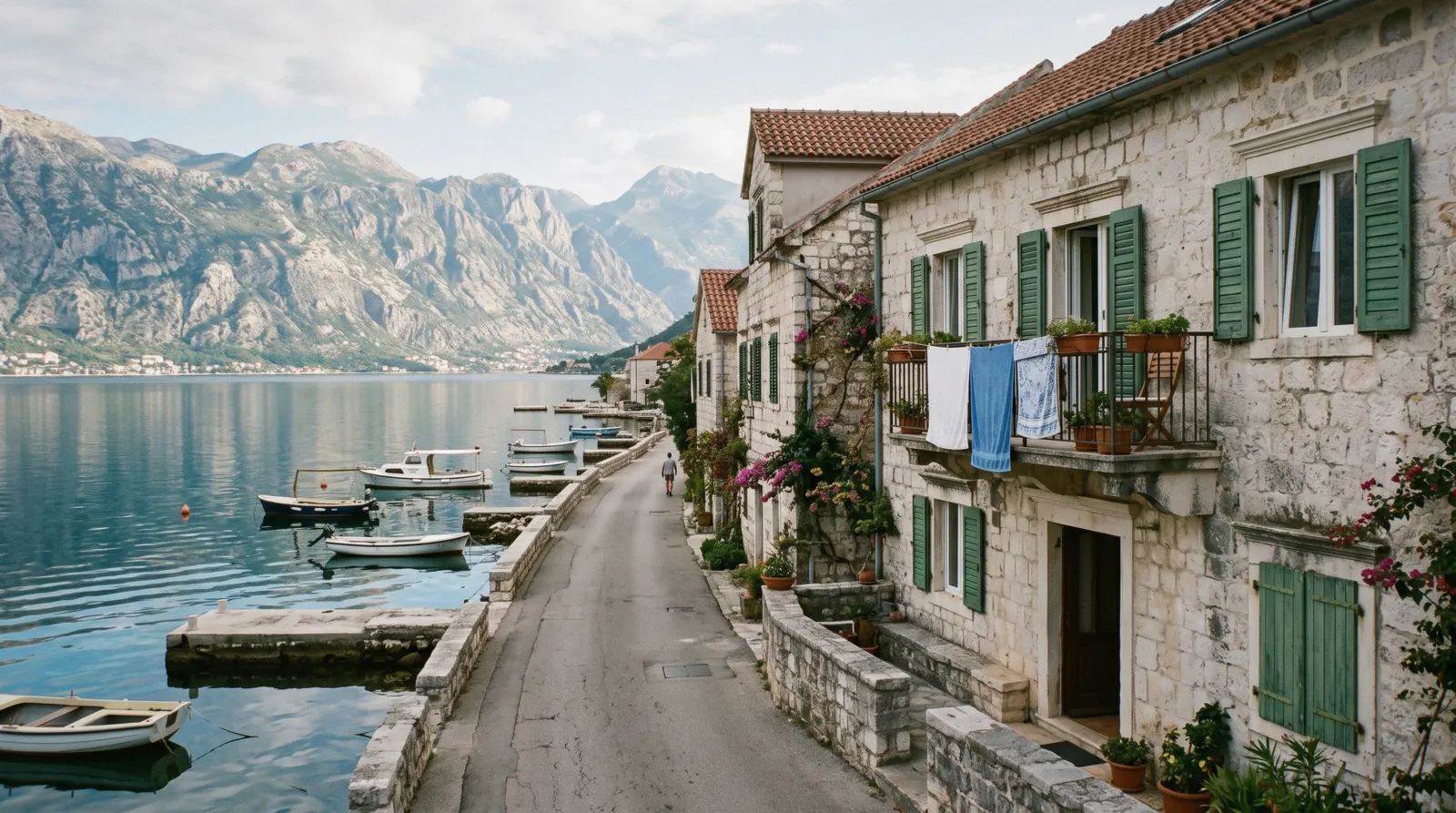
Apartments in Kotor: What the Keys, Stairs and Rules Really Are
Apartments in Kotor trade service for space, and the trade suits families. Kotor apartments An apartment in Kotor is usually more space, a kitchen and often a washing machine, in a town where hotel rooms are small and hotel prices rise with every cruise call. But Kotor is also a stone town inside UNESCO walls, and that shapes everything about renting here: stairs instead of lifts, lanes too narrow for luggage wheels, a registration rule your host is supposed to handle, and parking that exists only outside the old town. This page explains what an apartment in Kotor actually delivers, what the legal and practical fine print is, which neighbourhoods suit which traveller, and when a hotel or a hostel is the better buy. Start with our wider where to stay overview, then come back here for the apartment specifics. The full guide lives on Kotor City Guide.
Quick answer The answer first, then the details that decide it
Book an apartment in Kotor if you want space, a kitchen and a washing machine and you do not mind stairs. Inside the walled town you get atmosphere and zero parking. In Dobrota you get the waterfront. In Škaljari you get parking and lower prices. Every guest must be registered and the residence tax is €1.00 ($1.14) per person per night, with under-12s exempt. Your host normally does the paperwork. If you are driving or travelling with children, look outside the walls first. If you want to step out of the door into the lanes, book inside and pack a bag you can carry.
Key takeaways
- The next stop after this page: None.
- The full guide lives on Kotor City Guide.
- The full guide lives on Kotor City Guide.
What An Apartment In Kotor Actually Gets You
Kotor apartments are mostly flats in old stone buildings or conversions in the newer quarters. The trade-offs come from the town's shape, not from any host's marketing.
Space And A Kitchen
The first thing an apartment buys over a hotel room is floor plan. A one-bedroom flat in Kotor typically gives you a separate living area, a real fridge and a kitchen where you can cook breakfast before the day trippers arrive. For a family of four that is the difference between one room and two rooms plus a sofa, and it usually costs less than booking two hotel rooms.
There is no official nightly-rate table for Kotor accommodation, so we will not invent price bands. What we can say is that the economics improve with group size: a flat priced for one party divides far better between four people than two hotel rooms do. Compare the town's full accommodation picture on our Kotor hotels page before you commit either way.
- A kitchen and fridge, useful for self-catering breakfasts and picnics for the bay
- Separate bedrooms in most one and two-bedroom flats, unlike most hotel rooms in the old town
- More bathroom per person in a family group
- Space to dry swimwear and store luggage out of the walking route
The Washing Machine
It sounds trivial until you are on day five of a two-week trip with children. A washing machine is the single most cited practical reason travellers pick a Kotor apartment over a hotel, because mid-range hotels in town generally offer no guest laundry without sending items out. Pack less, wash mid-trip, and dry things on a rack or a balcony.
The bay's summer climate helps: average highs run around 29.6C in July and 29.7C in August on the long-term normals, so cotton dries on a line in an afternoon. In the wetter months, November alone averages 354 mm of rain on the same records, so do not count on outdoor drying in late autumn and winter.
The Terrace
Many Kotor apartments advertise a terrace or balcony, and inside the walled town the good ones look straight up at the fortress walls or across the roofs toward the mountain. A terrace is where an apartment earns its price: your own outdoor table, morning coffee with a view of the ramparts, laundry space. Two cautions.
First, terraces on upper floors mean the same stairs on the way to bed that you climbed with your suitcase. Second, roof terraces in the old town can be close to neighbouring ones, and the lanes below carry sound late into summer evenings. If quiet matters more than the view, a ground-floor flat in Dobrota with a garden may suit you better than a third-floor terrace above a square.
Our best views of Kotor page covers the public viewpoints if you decide the view belongs outside your rental.
The Registration Rule And The Residence Tax
Montenegro runs a formal guest registration system and a per-night residence tax. This is the part of renting a Kotor apartment that most first-time visitors get wrong, usually because nobody told them.
How Registration Works
Under the rules published by the Tivat tourism organisation, every foreign guest staying overnight in Montenegro must be registered, and the residence tax (boravišna taksa) is €1.00 ($1.14) per person per night. Guests under 12 are exempt, and guests aged 12 to 18 pay half. If you stay in a hotel or a licensed apartment rental, your accommodation registers you and collects the tax.
If you stay in a private arrangement, the rules say guests register at the tourist organisation within 24 hours. In Kotor the tourist info point sits by the Sea Gate and on Arms Square, so the practical task is a short walk. English is widely spoken in the old town, so the paperwork is not a language problem.
- Tax: €1.00 ($1.14) per person per night
- Under 12: exempt
- Ages 12 to 18: half the tax
- Licensed rental or hotel: your host registers you
- Private stay: register at the tourist organisation within 24 hours
What To Ask Your Host Before You Book
Ask two questions before you pay a deposit. First, do you register guests and is the residence tax included in the price or paid separately? The €1.00 ($1.14) figure is small, but the answer tells you whether you are dealing with an operator who knows the system.
Second, how and when do I collect the keys? A host who answers both crisply is usually a host who has done this many times. If the listing is evasive about registration, that is a signal, not a typo.
The formal registration record also matters if anyone asks to see proof of legal stay at the border, so keep whatever slip or confirmation your host gives you. Our Kotor costs page puts the tax in context with the rest of a Kotor budget.
Are Airbnbs Legal In Kotor?
Private apartment rentals operate openly in Kotor and Montenegro's registration and residence tax rules are written to cover them, which implies a legal pathway for private stays: register the guest, collect the €1.00 ($1.14) per night tax, and keep the paperwork. What no source we checked publishes is a list of licensed rental operators or a count of legal listings, so we cannot tell you which individual flat on a booking platform holds a licence. The practical test is the registration question above.
A host who registers guests and itemises the tax is following the system a legal rental follows. Montenegro uses the euro unilaterally, though it is not a eurozone member, so your payment and the tax are both in euros from the start. Ask, get the answer in writing, and treat silence as a reason to book elsewhere.
Check-In Realities: Stairs, Lanes And Luggage
Inside the walled town there are no cars and no lifts in the old stone houses. Check-in is a physical event, and it is worth planning for.
Stairs Are The Price Of Atmosphere
Old Kotor houses were built long before lifts, so an apartment on the second floor means two flights of stone stairs, often narrow and uneven, sometimes with a turn. The same applies to the town's most famous climb: the fortress walls path runs about 1,350 steps up the mountain, so the town is honest about what stairs mean here. For an able adult with one bag it is a non-issue.
With a toddler, a pushchair, or a bad knee, it changes which flat you should book. Ask the host exactly how many flights and whether the staircase has a handrail. The answer will not appear in the photo gallery.
Luggage On Cobbles
The old town is fully pedestrian, and cars park at lots outside the walls. That means the last stretch of your arrival happens with your bags on your shoulder, over polished stone lanes that were laid for carts, not roller wheels. Two workarounds.
Pack so that each adult carries one bag they can manage for ten minutes, and ask the host to meet you at the Sea Gate, the main western entrance built in 1555, so you do not hunt for an unmarked door in the lanes. The pier sits about 100 m from the walls and cruise passengers walk 2-5 minutes to the same gate, so arriving by ship and arriving by bus put you within a few steps of the same start point.
Late Arrivals And Airport Transfers
Tivat Airport sits about 5 km from Kotor and Podgorica Airport about 65 km, so a late landing is realistic for many travellers. A self-check-in key box solves the midnight problem but not the finding-the-door problem in a warren of lanes. Two fixes.
Have the host meet you, or book a transfer whose driver walks you to the door. The Montenegro airport transfer to Kotor and the bay is a private van with a name sign in arrivals and the price fixed before you fly, priced per vehicle for up to eight people so it divides well for a group. The platform bills in your own currency and the listed price is US$66.38. Flight tracking is included, which matters if your inbound flight slips.
Which Area Suits An Apartment
Where you rent decides your mornings. Kotor's accommodation geography splits cleanly, and the same split decides whether an apartment or a hotel fits you better.
Inside The Walled Town
The walled old town has been on the UNESCO World Heritage list since 1979 and Venice ruled the town from 1420 to 1797, which is where the architecture comes from. Roughly 1,360 people actually live inside the walls, so residential flats exist but they are not numerous, and they go early for summer. What you buy is the doorstep experience: out the door into the lanes, St Tryphon's Cathedral around the corner, the Maritime Museum a short walk on the same square.
What you give up is parking, which does not exist inside the walls, and quiet on cruise days. Choose inside if you are car-free and want the town at dawn and after the day visitors leave.
Dobrota: Water Access And Evening Walks
Dobrota runs north along the waterfront and counts 7,345 residents on the 2023 census, so it is a real neighbourhood rather than a tourist strip. Apartments here often sit closer to the water, and the swimming is off the stone slabs and quays along the Kotor and Dobrota waterfront, because Kotor town itself has no sandy beach. That is the apartment advantage: many Dobrota flats put you a few steps from a morning swim in calm, deep, clear water.
You trade a walk or a short drive to the walls, and you should check whether your flat has its own parking if you have a car. Note for planners: no lifeguards are mentioned by any official source for the Kotor-side swimming spots, so swim accordingly. Our Kotor beaches page covers the sand options further out if stone slabs are not your thing.
Škaljari And The Upper Town: Parking And Prices
Škaljari sits above and behind the old town, home to 3,342 people on the same census, and it is where the parking lives. If you arrive with a rental car, remember that parking inside the walls does not exist and the lots sit outside. A flat in Škaljari or the upper town with its own space removes the nightly parking puzzle entirely, and rates there tend to undercut the walled centre.
The cost is the walk: downhill into town is pleasant, uphill after dinner is a warm ten minutes or so of slope. The lower station of the cable car sits at Dub above Škaljari, so mountain-day logistics also get easier from this side. Our getting around Kotor page maps the walking and bus options between quarters.
Further Out On The Bay
The wider where-to-stay geography also includes Prčanj and Orahovac on the bay for quiet and water, and Tivat for the marina and the airport. Apartment stock exists out there too, and the trade is simple: more calm, more driving. The coastal road to Perast is 12 km, and the hop-on bus and local buses cover parts of the shoreline.
If your plan is mountain days over beach days, our Kotor car rental page explains what a car opens up and where it can and cannot go.
The Family Case For A Kotor Apartment
Families are the group for whom an apartment in Kotor stops being a preference and becomes the sensible answer.
Why Families Win With A Flat
The maths first: one two-bedroom flat versus two hotel rooms, multiplied by every night. Then the practicalities. A kitchen handles early breakfasts before the day's plan starts.
A washing machine halves the packing. Separate rooms mean the children sleep while the adults are still awake. The residence tax rules even help slightly, since guests under 12 are exempt from the €1.00 ($1.14) per night charge.
And Kotor's scale works for families: the old town is compact, the swimming spots along the Dobrota waterfront are a stroll away, and our Kotor with kids page collects the specific family logistics, from the stairs to shade to the walls climb.
What To Check Before Booking With Children
Ask about the stairs and the floor, as above, but with a pushchair the question is sharper: a second-floor walk-up with a tight turn is a daily workout. Ask whether the terrace or balcony is child-safe, since old stone balustrades vary. Ask about air conditioning, because August highs average 29.7C on the long-term records and stone rooms hold heat into the night.
And ask where the nearest parking is if you drive, even for a flat inside the walls, so you know the walk from the lot. A host who answers all four questions in one message is the host you want.
Apartment Vs Hotel Vs Hostel In Kotor
The Comparison The options compared here are exactly the ones this page's cards and the gate prices cover. The euro figure is the official one; the dollar gloss converts at €1 = $1.14.
| Factor | Apartment | Hotel | Hostel |
|---|---|---|---|
| Space | Separate living area and bedrooms | One room, usually compact | Shared dorm or small private room |
| Kitchen | Yes, full kitchen in most listings | Not in standard rooms | Shared kitchen in some hostels |
| Washing machine | Common in apartments | Not stated for Kotor hotels | Not stated |
| Parking | Possible outside the walls or in Škaljari | Does not exist inside the walls | Not stated |
| Registration and tax | Host registers you, tax €1.00 ($1.14) per person per night | Hotel registers you, same tax | Hostel registers you, same tax |
| S | t | a | f |
| Staffed front desk | No, self check-in or host meeting | Yes | Yes, reception |
| Stairs | Often several flights, no lift | Varies by building | Varies |
| Published nightly rates | No official rate table exists | No official rate table exists | No official rate table exists |
| Best for | Families, groups, longer stays | Short stays, service, central base | Solo travellers on a budget |
Figures trace to the gate prices and cards on this site. Figures current in Q3 2026.
The First 24 Hours From Your Apartment Door
Once the keys are in your hand, Kotor is small enough that the whole first day runs on foot. Here is the route our own guides follow, starting from wherever your flat is.
Morning In The Lanes
Enter the old town through the Sea Gate, built in 1555, onto the Square of Arms where the 1602 Clock Tower leans slightly toward the water and a medieval pillory stands in front of it. Walk a slow loop: St Luke's church of 1195, which is said to be the only building that survived the great earthquakes intact, then St Tryphon's Cathedral, consecrated in 1166, with admission at about €4 ($4.56) and sources ranging €2.50 to €5. The tourist info point by the Sea Gate or on Arms Square can answer the registration question if you are handling it yourself.
The whole walk is free and covered in detail on our Kotor old town page.
Afternoon On The Water Or The Wall
Two directions, one afternoon. Up: the walls climb is about 1,350 steps and roughly 280 m to San Giovanni fortress, 45-60 minutes up, with the gate price at €15 ($17.12) in the main season and about €8 reported in winter. Out: a boat. The Blue Cave speedboat tour runs a three-hour loop with twenty minutes at Our Lady of the Rocks, the submarine tunnel and a swim at the cave, at US$63 as listed on the platform, which bills in your own currency.
Boats no longer enter the cave, so you swim in from the mouth. Back at the flat, this is where the kitchen earns its keep: groceries, a simple dinner, and the evening lanes to yourselves once the day visitors leave.
The Longer Stay Advantage
An apartment turns Kotor from a two-sight stop into a base. With a kitchen and a washing machine you can spend a day on the cable car and the serpentine, a day in Perast, a day kayaking, and cook on the nights between. Our 3 days in Kotor itinerary is built for exactly this rhythm, and the food tour fills one evening with the bay's own table if you want a night off cooking.
The flat is what makes the slower plan affordable, which is the quiet reason locals' neighbours keep renting them out.
Getting There With Luggage
The last kilometre of your journey decides how pleasant your first hour in the flat is.
From Tivat And Podgorica Airports
Tivat is about 5 km from Kotor and Podgorica about 65 km, with the road inland running through the Vrmac tunnel to the Adriatic highway. Options run from taxis to shuttles to pre-booked transfers, and the honest comparison lives on our Tivat airport and Podgorica airport pages. What matters for an apartment guest specifically is the door-to-door question: a hotel has a lobby to receive you at midnight, a flat may not.
That is the case for arranging a driver in advance rather than negotiating at arrivals. The Montenegro airport transfer to Kotor and the bay puts a name sign in the arrivals hall, tracks your flight, and charges a fixed per-vehicle price of US$66.38 for up to eight people, booked through the platform. The driver gets you to the nearest legal point and the host meets the bags from there.
Arriving By Bus Or Car
The bus station sits by the sea, and local buses along the bay leave from there, so an apartment in Dobrota can be a short ride from your drop-off while an old-town flat is a walk through the Sea Gate. If you drive, plan the parking before the booking: inside the walls it does not exist, and the lots sit outside. Our getting around Kotor page covers the lots, the buses and the hop-on option, and no official fare table for Kotor's local buses was found in the sources we checked, so ask the driver or check locally rather than trusting any printed figure.
Coming from Croatia? The Dubrovnik to Kotor page explains the border arithmetic, which can add anywhere from 30 minutes to 3 hours at the worst July and August peak.
Are Airbnbs legal in Kotor?
Private apartment rentals operate openly in Kotor, and Montenegro's rules are built around them: guests must be registered, and private-stay guests register at the tourist organisation within 24 hours. No published list of licensed operators exists, so the practical test is your host. A host who registers guests and handles the €1.00 ($1.14) per night residence tax is following the system. Ask before you pay, and treat an evasive answer as a reason to book a different flat.
How does tourist registration work in Montenegro?
Every foreign guest must be registered, and the residence tax is €1.00 ($1.14) per person per night, with under-12s exempt and 12 to 18 year olds paying half. Your accommodation registers you if you stay in a hotel or licensed rental. For a private stay, the rules say you register at the tourist organisation within 24 hours, and in Kotor that office sits by the Sea Gate and on Arms Square. Keep whatever confirmation you are given.
Are Kotor apartments cheaper than hotels?
Often yes per person, especially for families and groups, because one flat divides between four people better than two hotel rooms. But no official nightly-rate table exists for Kotor, so nobody can honestly print a fixed percentage. Compare live prices for your dates, add the residence tax to both sides, and weigh what the flat gives you beyond the rate: space, kitchen, washing machine, and usually more room per euro for a group.
Do Kotor apartments have parking?
Inside the walled old town, parking does not exist at all, because the lanes are pedestrian and cars use lots outside the walls. Apartments in Škaljari and the upper town are where parking lives, often on site, which is a main reason car-borne travellers book there. In Dobrota it varies by property, so ask the host directly. Our getting around Kotor page maps the lots and the walk from them.
Which area is best for an apartment in Kotor?
It depends on your trip. Inside the walls suits car-free travellers who want the lanes at dawn and after the day visitors leave. Dobrota suits swimmers and evening walkers, since the waterfront quays are the town's swimming spots. Škaljari and the upper town suit anyone with a car, for parking and lower rates. Prčanj, Orahovac and Tivat suit quiet seekers and airport logistics. Match the quarter to how you travel, then book early, because in-wall flats are few and go first.
Prices, hours and terms are set by the venue or operator and confirmed at checkout.
We may earn a commission if you book through one of our links, at no extra cost to you. Full affiliate disclosure