 Kotor City Guide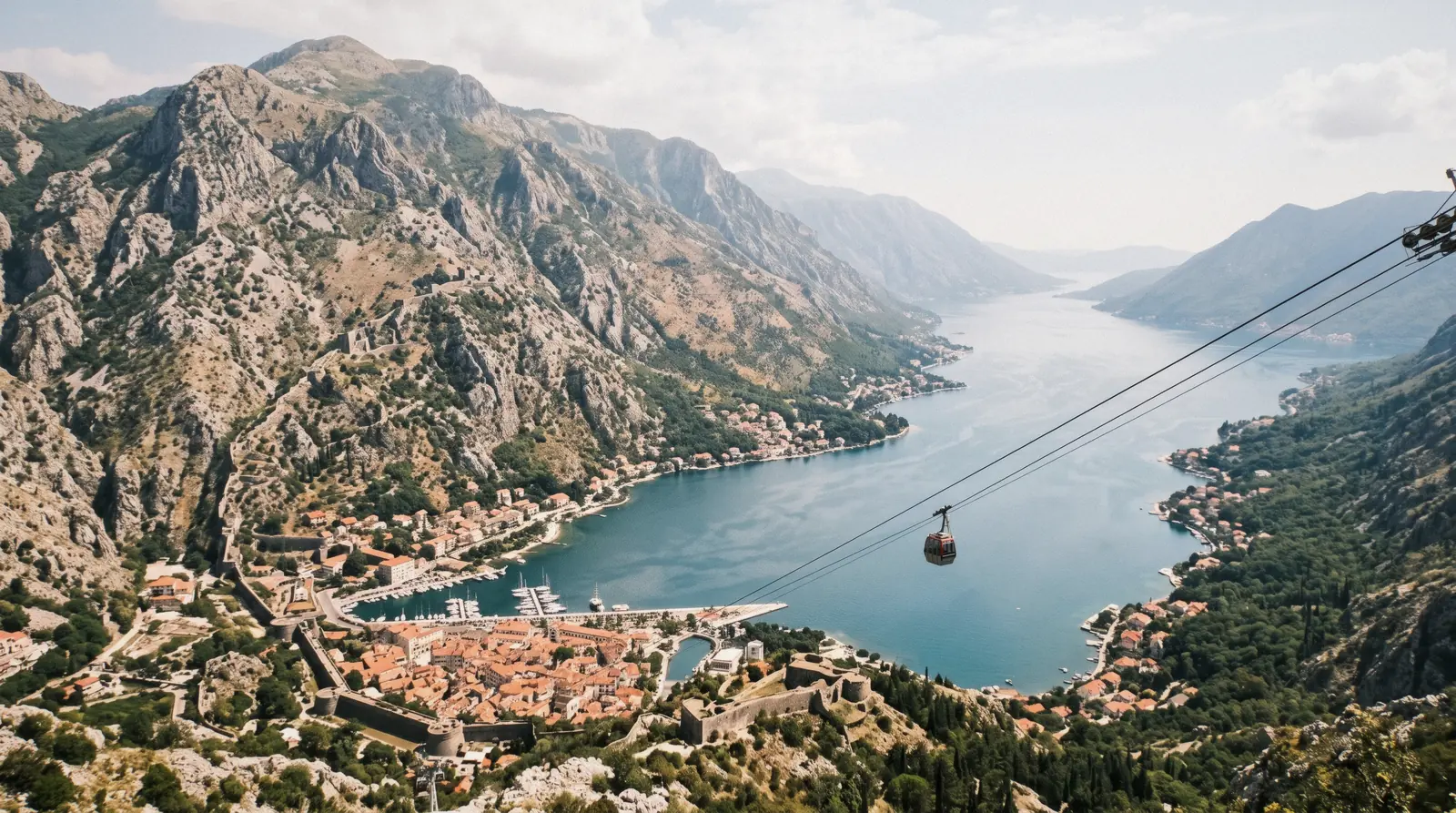
Three Days in Kotor: the Town, the Bay, the Mountain
Three days in Kotor is the right length, and the split is not arbitrary. The walled town takes a half-day on foot. The walls climb takes half a morning. A bay morning, whether you go to Perast or out to the Blue Cave, takes the other half. The cable car or the serpentine takes a half-day, and a beach afternoon closes a hot day. Two nights cover the essentials. The third day is what buys you the mountain. This kotor itinerary walks that arithmetic through day by day, prices every gate, and shows you what to move when the weather turns. Montenegro uses the euro unilaterally, so the cash in your pocket is euros even though the country is not in the eurozone, and every figure below is euro first with the dollar gloss. The full guide lives on Kotor City Guide.
Quick answer The answer first, then the details that decide it
Day one is Kotor itself: the old town in the morning, the walls climb late afternoon when the day cools. Day two is the water: Perast and Our Lady of the Rocks, or a boat circuit to the Blue Cave, with a swim after. Day three is the mountain: the cable car to the Lovćen ridge, then Njeguši and Cetinje by road. Two nights cover the town and the bay. Three add the mountain, which is the day most visitors skip and the one the bay is framed by. Every stop below links to its own page, and the tour cards at the bottom handle the days you would rather not drive.
Key takeaways
- The full guide lives on Kotor City Guide.
- Lovcen national park: the page that owns this question is at Lovcen national park.
- Njegusi: the page that owns this question is at Njegusi.
The logic is heat, ships and light. The walls have no shade and 1,350 stone steps, so they belong to early morning or the last two hours of daylight. The bay is calmest before the afternoon wind and the boats fill up by late morning.
The mountain is the day most exposed to weather, so it sits last and can swap with anything. If a cruise ship docks, its passengers flood the lanes from about 10:00, which is your cue to be on the walls, on the water, or already up the gondola. The port expects about 523 calls from roughly 85 ships across 2026, so ship days are common rather than exceptional.
The cruise port page explains how arrival times slip, because ships must pass the 340-metre Verige Strait and queue behind each other.
The town itself is nearly free. Walking the walled town costs nothing, St Luke's church publishes no ticket, and the free things to do page lists the lot. The paid gates are the walls at €15 ($17.12) in the main season, St Tryphon's Cathedral at about €4 ($4.56) with sources ranging €2.50-5, and the Maritime Museum at €4 ($4.56) with children at €1.
The cable car is €25 ($28.53) return for adults, €7 ($7.99) for children aged 2 to 12. On the water, a water taxi from the Perast quay runs about €5 ($5.71) return, the island admission at Our Lady of the Rocks is €5 ($5.71) per guest in cash since April 1 2026, and the church-museum asks €3-5 cash. Residence tax is €1.00 per person per night, collected by your accommodation, under 12 exempt.
Where three days starts to cost real money is tours and transport, compared below. English is widely spoken in the old town and the tourist info point sits by the Sea Gate and on Arms Square, so booking on the spot is easy if you decide late.
Day 1
-
Sea Gate and the Old Town
FreeEnter through the Sea Gate, built in 1555 in the Venetian era, which opens straight onto the Square of Arms. The baroque Clock Tower of 1602 leans slightly toward the gate and a medieval pillory stands in front of it. Venice ruled Kotor from 1420 to 1797 and the architecture says so on every lane.
The town has been on the UNESCO World Heritage list since 1979, inscribed in the same year as the earthquake that damaged it, and the fortifications joined UNESCO's Venetian defences listing in 2017. Only about 1,360 people live inside the walls, which is why the lanes empty so completely once the day boats leave. Go early, before ship passengers arrive from the pier that sits about 100 m away.
The full walk is mapped on our old town page and the pins sit on the Kotor map.
walk 2 min to next
-
St Tryphon's Cathedral
About €4 ($4.56), sources €2.50-5The cathedral was consecrated in 1166 and keeps the relics of Kotor's patron saint. It was badly damaged in the 1667 earthquake, the same one that wrecked Dubrovnik, and its two towers are famously unequal after the rebuilds. That asymmetry is the detail everyone photographs.
Admission is about €4, open daily roughly 09:00-19:00 in season with Sunday mass in the morning, so a Sunday visit means arriving after the service. Give it thirty to forty minutes, longer if you like Romanesque interiors that have not been tidied up for tourists. The door price is adjusted occasionally, so treat any printed figure as close rather than exact.
Our cathedral page carries the fuller history.
walk 2 min to next
-
Maritime Museum and the Cats
€4 ($4.56), children €1The Maritime Museum of Montenegro fills the Grgurina palace at Trg Bokeljske mornarice 391 and tells the story of the bay's merchant fleets, which is the story of how this small town got rich. Children pay €1. Summer evenings extend the hours in July and August, though the exact 2026 schedule varies by source, so go midday and treat any evening opening as a bonus.
After the museum, find the cats. They are a civic symbol here: cat shops, a cat museum, the Cats' Square by the Sea Gate, feeding stations, and the Kotor Kitties charity running spay-and-neuter. Our cats of Kotor page tells you where they gather.
Lunch belongs to the lanes, and the where to eat page lists tavernas rather than pretending a ranking exists, because no citable one does.
walk 5 min to next
-
City Walls to San Giovanni Fortress
€15 ($17.12), children under 12 freeSave the walls for late afternoon. The climb is about 1,350 stone steps rising roughly 280 m to San Giovanni fortress, 45 to 60 minutes up and about 30 down, along walls that run about 4.5 km above the town with sections up to 20 m high. A fortress has stood here since Justinian's fort of 535.
The Church of Our Lady of Remedy sits on the path about halfway up, and the switchbacks above the town are lit by small warm lights after dark. The gate price is €15 in the main season, with about €8 reported November to March, and entrances are staffed 07:00-20:00. No official page publishes the price, which is why the figure is a gate report.
Bring water, because the path has no shade and the drops are steep and unguarded. If your legs object, the free Ladder of Kotor trail climbs the same mountain on about 70 switchbacks to the Krstac pass at about 940 m. Everything else about the route is on the fortress page and the best angles are ranked on the views page.
Day 2
-
Perast
Free to wander. bus or taxi fare not stated by any official sourcePerast sits 12 km from Kotor by the coast road, a baroque town of sea captains that lost its trade when the sailing age ended and so kept its palaces. The parish church of St Nicholas has a bell tower about 55 m high, said to be the tallest on the bay and climbable by internal stairs. Arrive before 11:00.
Tour groups land by mid-morning and the quay is small. Local buses along the bay leave from the Kotor bus station by the sea, though no official source publishes the fare, so check at the window. The town itself costs nothing to walk and the quay is the jumping-off point for the island next door.
Our Perast page covers the palaces and the practicalities.
walk 5 min to next
-
Our Lady of the Rocks
Water taxi about €5 ($5.71) return, island €5 ($5.71) cash, church-museum €3-5 cashThe island is artificial, 0.38 ha built over centuries from rocks and scuttled ships loaded with stone. Seamen laid a rock on it after each successful voyage, and the legend says fishermen found an icon of Madonna and Child on the rock on 22 July 1452. Every 22 July at sunset the fašinada procession still rows out and throws stones to widen it.
Inside, Tripo Kokolja of Perast painted 68 baroque works, the largest about ten metres long, and Jacinta Kunić-Mijović's votive embroidered hanging took 25 years, embroidered in gold, silver and her own hair. The water taxi from the quay runs about €5 return, up to €10 reported. Island admission is €5 per guest, cash only, since April 1 2026, and a dress code applies: no swimwear, shoulders covered.
The full story is on the Our Lady of the Rocks page.
-
Swim Off the Slabs
FreeHere is the fact nobody puts on a postcard: Kotor town has no sandy beach. Swimming is off stone slabs and quays along the Kotor and Dobrota waterfront, the water is calm, deep and clear, and there is no shallow entry. That makes the hottest afternoon the right slot for it, which is why the swim sits here on day two rather than on the walking-heavy day one.
No lifeguards are mentioned by any official source for the Kotor-side spots, so swim with that in mind. If you need sand, the beaches people mean when they search lie outside town: Trsteno and Plavi Horizonti on the Tivat side, Jaz on the road toward Budva, all covered on the beaches page. The bay itself is a ria about 28 km long, up to 60 m deep, walled in by the Orjen and Lovćen massifs, which is why it holds heat and stays calm.
More on the bay of Kotor page.
-
Blue Cave by Boat or Paddle
Tours from US$63. the cave charges no entry of its ownIf you would rather spend day two entirely on the water, swap the Perast morning for a boat circuit. The Blue Cave speedboat tour runs three hours out of Kotor: twenty minutes at Our Lady of the Rocks, a look inside a former Yugoslav submarine tunnel at Rosa, past the Austro-Hungarian Mamula fortress island, then thirty minutes swimming at the cave. Since the 2026 season change boats are no longer allowed inside, so you swim in from the mouth when the skipper judges the swell safe.
The active alternative is the Blue Cave kayak and snorkel adventure, five hours in double sea kayaks with snorkel gear, minimum group two, which reaches the same cave without an engine. Note that the kayak trip needs six full days of cancellation notice, not 24 hours. The cave sits on the Herceg Novi side of the bay entrance and the only access is by boat, as the Blue Cave page explains.
Day 3
-
Kotor Cable Car to the Ridge
€25 ($28.53) return adult, €7 ($7.99) child 2-12The gondola leaves from Dub above Škaljari and takes 11 minutes to the Krstac ridge, the same height the Ladder of Kotor hikers earn on foot. Fares are €25 return for adults, €7 for children aged 2 to 12, €12 disabled, with one-way at €14. Hours are 09:00 to 20:00, from 10:30 on Tuesdays, last ride up 19:30 and last down 20:00.
At the top there is an Alpine Coaster on a 1,056 m track at €12, a Falcon Fly zipline-coaster at €15 and an Aerobar at €15. The gondola closes for wind or maintenance with little notice, so check same-day status before you commit a morning to it. Taxis charge about €20 each way from town, or the hop-on bus and tours reach the lower station by road.
The cable car page has the full fare table.
walk 30 min to next
-
Njeguši
Free to wander. tastings priced by the tavernsThe serpentine from Kotor to Njeguši was built 1881 to 1884 under Austria-Hungary as a wagon and military route over Lovćen to Cetinje. It carries 25 numbered 180-degree hairpins plus about 75 further turns, and takes 30 to 45 minutes from Kotor to hairpin 25. Njeguši village is the birthplace of Petar II Petrović-Njegoš, Montenegro's poet-prince, and the village's dry-cured, wood-smoked ham, Njeguški pršut, is aged in its mountain air and eaten with Njeguši cheese and bread.
Family taverns on the main road run tastings. This is the stop a rental car unlocks: the road is narrow but paved, and parking inside the walls does not exist, so leave the car in the lots outside. The village and the road are covered on the Njeguši page.
walk 40 min to next
-
Lovćen National Park and the Mausoleum
Park about €3 ($3.42) reported, mausoleum €8 ($9.13) adult, €4 ($4.56) childFrom the upper parking at Jezerski vrh, 461 steps climb to Njegoš's mausoleum, where Ivan Meštrović carved the two giant caryatids and the seated figure of the poet-prince himself. The view runs from the Bay of Kotor across to the Montenegrin highlands, and on a clear day it is the best single panorama of the trip. The park gate charges about €3 on recent visitor reports, the mausoleum €8 adult and €4 child or student, with combined tickets with Cetinje museums at about €20 reported.
Note the honesty here: the national parks price list was unreachable when we checked, so these are gate reports, not official figures. Hours run about 09:00-18:00 in the summer season, mid-April to mid-November, and the National Museum closes the mausoleum from 16 November to 10 April. Winter visitors get the gondola ridge instead.
The Lovćen page carries the detail.
-
Cetinje
Museum of King Nikola about €8 ($9.13), combined tickets about €20 ($22.82) reportedCetinje has been Montenegro's historic capital since Ivan Crnojević founded it, with a castle in 1482 and a monastery in 1484, and it sits on the UNESCO tentative list. The Museum of King Nikola fills the royal palace built 1863 to 1867, charging about €8 on the official list. The Cetinje monastery, rebuilt in 1701 on the 1484 site, keeps the right hand of St John the Baptist and a particle of the True Cross.
The Vlach church of 1886 holds the tombs of King Nikola and Queen Milena behind a fence of rifle barrels captured from the Turks. Museums open about 09:00-17:00, so this stop needs a 14:00 arrival to be worth the drive. If the day is already full, Cetinje is the natural thing to drop, or hand the whole mountain day to a tour.
The Cetinje page and the day trips hub cover the options.
The options compared here are exactly the ones this page's cards and the gate prices cover. The euro figure is the official one; the dollar gloss converts at €1 = $1.14.
| Option | What you get | Cost per person | Best for |
|---|---|---|---|
| Gondola only, self-guided | 11-minute cable car to the Krstac ridge, Alpine Coaster and zipline at the top, town by taxi | €25 ($28.53) return plus about €20 ($22.82) each way by taxi | Half a day, families, anyone who wants the view without the driving |
| Rental car, Njeguši and Cetinje added | The 25 hairpins, Njeguši tastings, Lovćen mausoleum and Cetinje museums at your own pace | Gates about €11 ($12.55) in tickets plus the rental. parking outside the walls only | Drivers happy on narrow paved roads who want the full mountain day |
| Guided day tour | Minivan, driver, the serpentine, Njeguši, Cetinje and the cable car or mausoleum handled for you | From US$73 on the cable car day tour to US$106.91 plus €16 cash extras on the Great Montenegro loop | No car, no nerves on hairpins, or only one shot at the mountain |
The gondola figures are the operator's own published fares. Tour prices are US dollars as listed on the booking platforms, which bill in your own currency. Lovćen park and mausoleum figures are recent gate reports because the official price list was unreachable. Figures current in Q3 2026.
Three cards cover the two days most visitors hand over. The platform bills in your own currency, so treat the dollar figures as list prices.
The itinerary has a built-in order of sacrifice. Rain hits the mountain day first and hardest, and the gondola closes for wind or maintenance with little notice, so day three is the day to swap. Move the walls climb or the museum morning into the wet slot: the Maritime Museum at €4 and the cathedral at about €4 are the town's standing rain plans, and long taverna lunches fill the rest.
November is the wettest month at 354 mm, though rain falls in every month. The heat rule is the reverse: July and August average 29.6 to 29.7 degrees, so in high summer the walls climb moves to early morning or the last hours before the 20:00 gate close, and the swim claims the hottest afternoon. Shoulder months make all of this easier, with May at 22.5 degrees, June at 26.8, September at 24.9 and October at 20.9, warm water without peak ships and heat.
The full month-by-month picture sits on the weather page and the best time to visit page. If rain wins the whole trip, the rainy day page has the fallback list.
Three days leave the obvious extensions unclaimed. Budva is a short coast-road run, a settlement over 2,500 years old with a free old town and a citadel at about €5-6 reported, and Mogren beach about 150 m west past the Ballet Dancer statue. No official bus fare table was found for the route, so check at the station. Sveti Stefan, the fortified islet on its sandy isthmus, changes its beach access rules repeatedly, with 2026 reporting suggesting two of three beaches public while Queen's Beach stays hotel-only. Both are on the Budva page and the Sveti Stefan page. Inland, Durmitor National Park and the Tara rafting day are long-haul options, and the day trips hub ranks them all.
Is 3 days in Kotor too long?
No. Two nights cover the essentials: the walled town, the walls climb, and one bay morning. The third day is what buys the mountain, the Lovćen ridge, Njeguši and possibly Cetinje, which is the day most visitors skip. With a fourth day, Budva or a long-haul trip inland fills it without repeating anything.
What is the best 3 day Kotor itinerary?
The split this page uses: day one the old town in the morning and the walls from about 16:30, day two Perast and Our Lady of the Rocks followed by a swim, day three the cable car to the ridge and the serpentine to Njeguši and Cetinje. The order is built around heat, cruise-ship crowds and weather risk.
Should day three be the mountains or the beach?
The mountains. The beach fits naturally as the hot afternoon of day two, after the bay morning, and Kotor town has no sandy beach anyway, just stone slabs along the Dobrota waterfront. The mountain is the day that needs the most logistics and the one the whole bay is framed by, so it earns the full day.
Do I need a car for three days in Kotor?
Not for days one and two. The old town is fully pedestrian, Perast is on the bay bus line, and boat tours leave from the town side. A car earns its keep on day three: it is what opens Njeguši, Cetinje and Lovćen in one day, with parking in the lots outside the walls. Without a car, the cable car, the hop-on bus or a guided tour covers the mountain.
What does 3 days in Kotor cost?
The fixed gates are modest: walls €15, cathedral about €4, Maritime Museum €4, cable car €25 return, Our Lady of the Rocks island €5 cash plus the water taxi at about €5 return, and residence tax €1.00 per person per night. The big variables are accommodation, food and tours, where guided days run from US$73 to US$106.91 plus €16 cash extras. The full breakdown lives on the costs page.
Prices, hours and terms are set by the venue or operator and confirmed at checkout.
We may earn a commission if you book through one of our links, at no extra cost to you. Full affiliate disclosure