 Kotor City Guide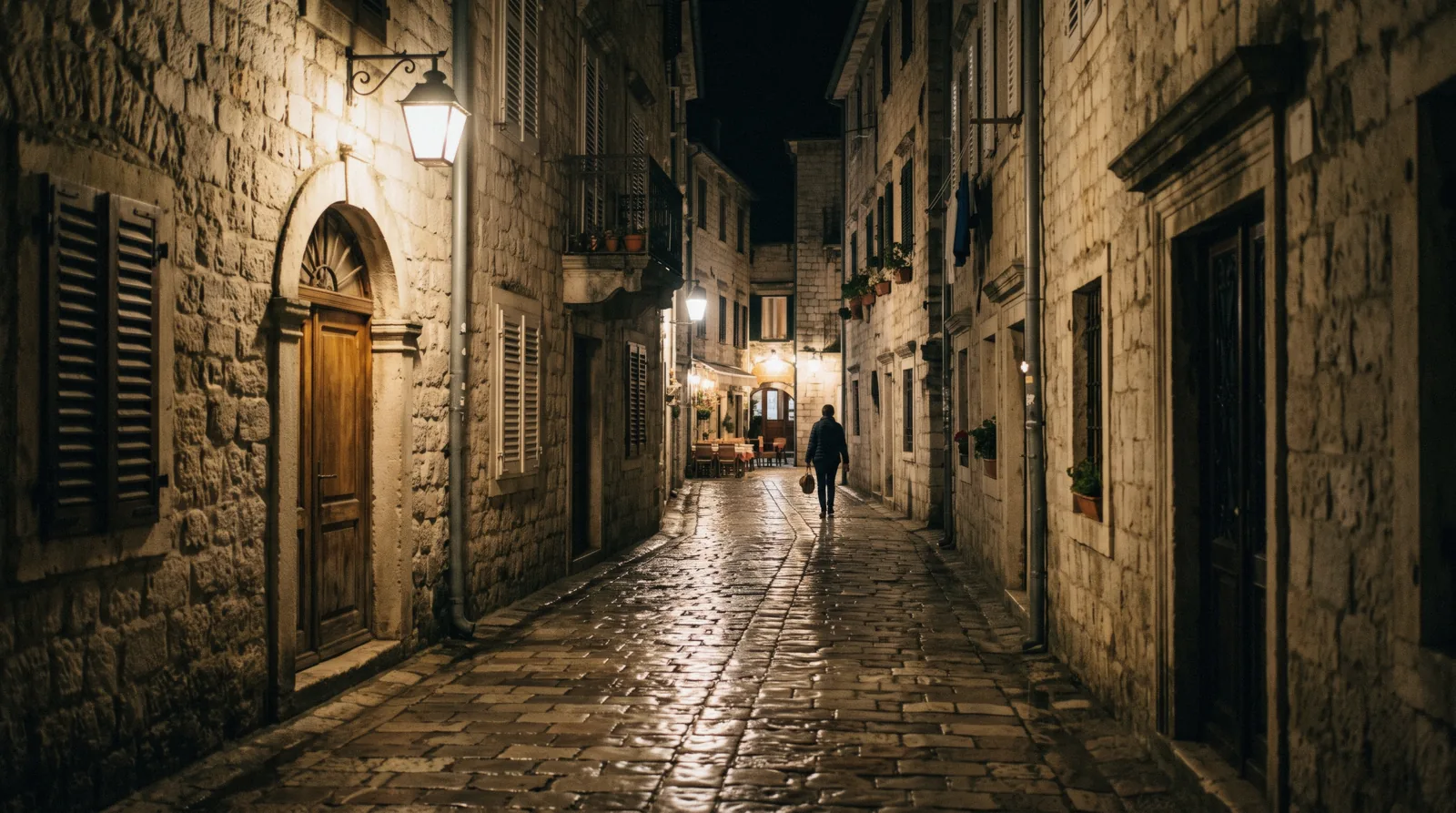
Is Kotor Safe? Crowds, Cliffs, Water and the Real Risks
Is Kotor safe? The town itself is, and the real risks are physical ones. Kotor is a safe town by the normal measures a traveller cares about. You can walk the walled lanes at night, English is widely spoken, and the tourist info point sits by the Sea Gate and on Arms Square if anything goes wrong. The risks here are not the ones people fear. Nobody publishes a Kotor crime-statistics page and no tourist-police service exists. What the town actually throws at you is physical: steep unguarded drops on the walls, swimming spots with no lifeguards, and summer heat on an unshaded climb. This page walks through each one and gives you the numbers to call. The full guide lives on Kotor City Guide.
Quick answer The answer first, then the details that decide it
Yes, Kotor is safe for tourists. Violent crime against visitors is not the story here and no official crime statistics page for the town exists, which is itself worth knowing. The honest safety picture has four parts. One, the walls climb is steep, mostly unshaded and has drops without railings, so it demands respect rather than courage. Two, every swim spot on the Kotor side of the bay has no lifeguard published by any official source, so you swim at your own judgement. Three, two-ship cruise days pack the old town lanes and the walls path, which is a comfort and pickpocket question, not a crime wave. Four, if something does go wrong, one number covers everything in Montenegro: 112. That is the whole story, and the rest of this page is the detail behind each line.
Key takeaways
- The full guide lives on Kotor City Guide.
- Kotor beaches: the page that owns this question is at Kotor beaches.
- Kotor costs: the page that owns this question is at Kotor costs.
Emergency Numbers And Getting Help
Call 112 For Everything
112 is the general emergency number in Montenegro and it covers ambulance, fire and police through one call. Save it in your phone before you arrive. There is no Kotor-specific tourist-police service published anywhere, so do not go hunting for one.
In practice that means 112 is your only number, which keeps things simple. English is widely spoken in the old town and the tourist info point by the Sea Gate and on Arms Square can help with non-emergency problems, lost tickets and directions. If you need a doctor, no clinic or pharmacy is named in any source this guide checks, so we print no name.
A pharmacy does sit in the old town and the info point can point you to it. For a hospital the honest line is not stated by any official Kotor source, so ask at the tourist info desk or call 112 and let them route you. What we refuse to do is invent a clinic name.
Our plan hub carries the practical pages this one links to.
The Walls Climb: Steep Steps And Unguarded Drops
What The Climb Actually Is The options compared here are exactly the ones this page's cards and the gate prices cover. The euro figure is the official one; the dollar gloss converts at €1 = $1.14.
| Fact | Figure |
|---|---|
| Stone steps to the fortress | about 1,350 |
| Height gained | about 280 m |
| Time up | 45-60 minutes |
| Time down | about 30 minutes |
| Gate price, main season | €15 ($17.12) |
| Gate price, November to March | about €8 ($9.13) reported |
| Entrances staffed in season | 07:00-20:00 |
Figures trace to the gate prices and cards on this site. Figures current in Q3 2026.
Swimming: Calm Water, No Lifeguards
Where You Swim And What Nobody Provides
Kotor town has no sandy beach. Swimming off the town slabs and quays along the Kotor and Dobrota waterfront is free and the water is calm, deep and clear, but there is no shallow entry, you step or lower yourself off stone. The critical safety fact is a negative finding: no official source mentions lifeguards for any Kotor-side swimming spot.
That means every swim is your own judgement. Enter slowly the first time, the depth is real, and do not swim out alone or after drinking. Families should read the town beach section of the beaches page before choosing a spot with children, since entry off slabs is harder for small legs than sand.
If you want sandy and shallow, the beaches people usually mean sit outside town on the Tivat side and toward Budva, covered on the same page.
The Blue Cave: Swimming Into It, Not Boating Into It
One water risk deserves its own paragraph. Since a 2026 season change announced as starting 21 May, boats are no longer allowed inside the Blue Cave. Visitors swim in from the mouth when the skipper judges the swell safe.
This is exactly what it sounds like: you go over the side of a speedboat and swim into a cave opening in open water. Skippers cancel or shorten the swim in rough conditions and you should trust that call. If you are a weak swimmer or travelling with children, ask the operator before booking how the swim works.
On the Blue Cave speedboat tour the swim is about 30 minutes at the cave, part of a three-hour circuit that also stops at Our Lady of the Rocks and a former submarine tunnel. The cave itself charges no entry fee, the cost is the boat. The full picture of the swim rules sits on the Blue Cave page.
Crowds And Pickpockets: Standard City Care
Two-Ship Days And What They Mean
Kotor is one of the Adriatic's busiest cruise stops. About 523 calls from roughly 85 ships are scheduled for 2026, and the pier sits about 100 m from the old town walls, so passengers flood straight into the lanes. On two-ship days the old town and the lower walls path get genuinely packed around midday.
This is a comfort problem before it is a crime problem, but crowds are where opportunistic pickpocketing happens anywhere in Europe, so treat Kotor like any dense old town. Keep bags zipped and in front of you in the thickest lanes, keep phones out of back pockets on the walls stairs where you are squeezed past other people, and be normal about valuables at the beach slabs while you swim. No source publishes a pickpocket statistic for Kotor and we will not invent one.
The honest framing is: the practical safety story in Kotor is crowds, not crime waves. Timing fixes most of it, and the cruise port page explains how ship schedules shape the day, while the best views guide lists vantage points that stay quiet past the first hour.
Heat, Sun And The Road In
Summer Heat Is A Real Risk
The bay sits in a bowl between two mountains and July and August average highs of 29.6 and 29.7 degrees, with the walls path adding full sun exposure to that. Heat exhaustion on the climb is a more likely incident than any street crime. Walk early, carry water, and use the cable car if midday is your only window.
November is the wettest month at 354 mm, so slick stone after rain is another reason to take the stairs slowly. The season-by-season detail lives on the weather page and the month picker on the best time to visit guide.
Roads And Driving
If you rent a car, the roads out of town are the mountain kind. The serpentine to Njeguši carries 25 numbered 180-degree hairpins plus about 75 further turns, built between 1881 and 1884, and it is narrow though paved. Drive it in daylight, take the hairpins wide and slow, and remember parking inside the walls does not exist, use the lots outside.
The car rental page and the getting around guide carry the practical routes.
What We Could Not Verify
Honest Gaps In The Safety Picture
Three things nobody publishes, and each gap matters to you. No Kotor crime-statistics page or tourist-police service exists, so any site quoting a Kotor crime rate is making it up. No official source names lifeguards for any Kotor-side swim spot, so plan swims as unguarded.
And no clinic, hospital or named pharmacy is published in the sources this guide checks, so for a medical problem call 112 or ask at the tourist info point by the Sea Gate. We will not invent names to fill the holes. The same honesty runs through the rest of the guide, including the worth visiting page and the travelling with kids page.
Book The Ticket Online
The walls are the one safety-relevant purchase most visitors make. The gate sells entry for €15 ($17.12) in the main season, and the Municipality of Kotor also sells the official city walls entry ticket online with a 24-hour cancellation window the gate ticket does not have.
Kotor Safety Questions
Is Kotor safe for tourists?
Yes. The practical safety story in Kotor is crowds, cliffs and unguarded water rather than crime. No Kotor crime-statistics page or tourist-police service exists, so judge the town on the physical risks: the walls drops, the unshaded climb, the lifeguard-free swim spots and summer heat around 29.7 degrees.
What emergency number works in Kotor?
112 is the general emergency number in Montenegro and covers ambulance, fire and police. There is no Kotor-specific tourist-police service published. For non-urgent help, the tourist info point sits by the Sea Gate and on Arms Square, and English is widely spoken in the old town.
Are there pickpockets in Kotor?
No source publishes pickpocket statistics for Kotor, so no honest number can be quoted. The realistic advice is standard city care: on two-ship cruise days the old town lanes and the walls stairs get packed, so keep bags zipped and in front of you and phones out of back pockets in the crush.
Is the walls climb dangerous?
It demands respect. The path is about 1,350 worn stone steps rising roughly 280 m to San Giovanni fortress, with steep unguarded drops and no shade, in season entrances staffed 07:00-20:00. Go early, wear real shoes, carry water and judge it against your head for heights. The free Ladder of Kotor or the cable car at €25 ($28.53) return are the lower-exposure alternatives.
Is the water safe to swim in Kotor?
The bay water off the town slabs is calm, deep and clear, but there is no shallow entry and no official source mentions lifeguards at any Kotor-side swim spot, so you swim at your own judgement. At the Blue Cave, boats no longer enter, you swim in from the mouth when the skipper judges the swell safe.
Is there a hospital or pharmacy in Kotor?
A pharmacy sits in the old town and the tourist info point can point you to it. No hospital or clinic is named in any official source this guide checks, so for anything medical call 112 or ask at the tourist info desk by the Sea Gate.
Kotor Safety on Film
Three videos that show the place before you go. They load from YouTube only when you press play.
Experience Montenegro Like a Local: Avoid THESE Mistakes [SUB&DUB]
A walk or ride through the subject of this page.
Video: Sitngo – Car Rental in MontenegroHow to Travel KOTOR MONTENEGRO (TRAVEL GUIDE)
A walk or ride through the subject of this page.
Video: Haley Takes On the WorldHow to Spend the Perfect Day in Kotor, Montenegro! 🇲🇪 | Virgin Voyages Port Day Vlog
A walk or ride through the subject of this page.
Video: Jessica MooreVideos load from YouTube only when you press play.
Prices, hours and terms are set by the venue or operator and confirmed at checkout.
We may earn a commission if you book through one of our links, at no extra cost to you. Full affiliate disclosure