The Walled Town in Walking Order
Five stops, one loop, no backtracking. Start at the water gate and finish above the roofs.
The Sea Gate and the foot of the walls
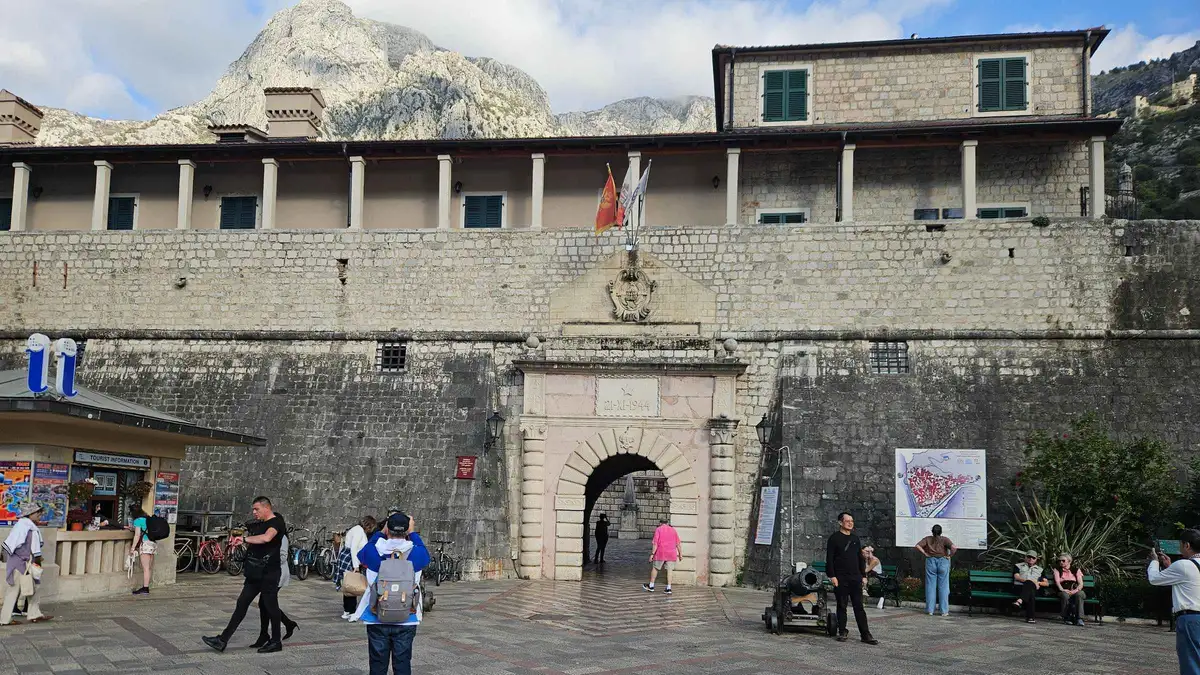
The Morska vrata is the town's water gate, the opening the Venetians cut through the fortifications so ships' people could walk straight in from the sea. It matters to you for a blunt reason: the cruise terminal sits about 100 m away, and passengers walk two to five minutes from gangway to gate, so this is the door nearly everyone arrives through. The tourist info point stands just inside, English is widely spoken, and the entrance funnels you straight toward Arms Square.
If a ship is in, expect the crowd to move in waves through this gate all morning. Our old town route starts here and shows you how to leave the crowd behind within two lanes: Kotor old town.
Arms Square and the Clock Tower
Trg od Oružja is the town's main square, named for the weapons stored in the arsenal that stood here when Kotor was a fortified naval town. The Clock Tower has watched it since the Venetian period, and the square still holds the tourist info point and the cafes where everyone orients themselves. It is the natural meeting point for guided walks, which is why both old-town tours in this guide start at the Sea Gate and end their routes nearby.
Come early or late, because on two-ship days the square carries the full midday load of shore parties. The square's buildings and their stories are unpacked in the old town guide: Kotor old town.
St Tryphon's Cathedral
The cathedral is the town's reason for being on the UNESCO list alongside the bay itself, a Romanesque church built when Kotor was a mercantile rival on the Adriatic, and it has been patched and rebuilt through earthquakes, most recently the one in April 1979 that put the whole region on the World Heritage list that same year. Admission runs about €2.50 ($2.85) and doors open daily roughly 08:00-19:00 in season, so it fits anywhere in the day. The two squat towers you photograph from outside are half the story.
The interior, the treasury and what survived the earthquakes are covered in detail here: Cathedral of Saint Tryphon.
The Maritime Museum
Kotor's wealth was never the land, it was the sea, and the museum in the Grgurina palace on Maritime Square tells that story through the ship-owning families who sent captains across every European coast. For a first-timer it explains why a town this small built 4.5 km of wall: the money was worth defending. Admission runs about €6 ($6.85), and an hour is enough.
It is also the best rainy-day ticket in town, which on the bay's wet winter months is worth knowing in advance. Collections, opening practicalities and what deserves your hour are in the museum guide: Maritime Museum Kotor.
The walls entrance and the climb
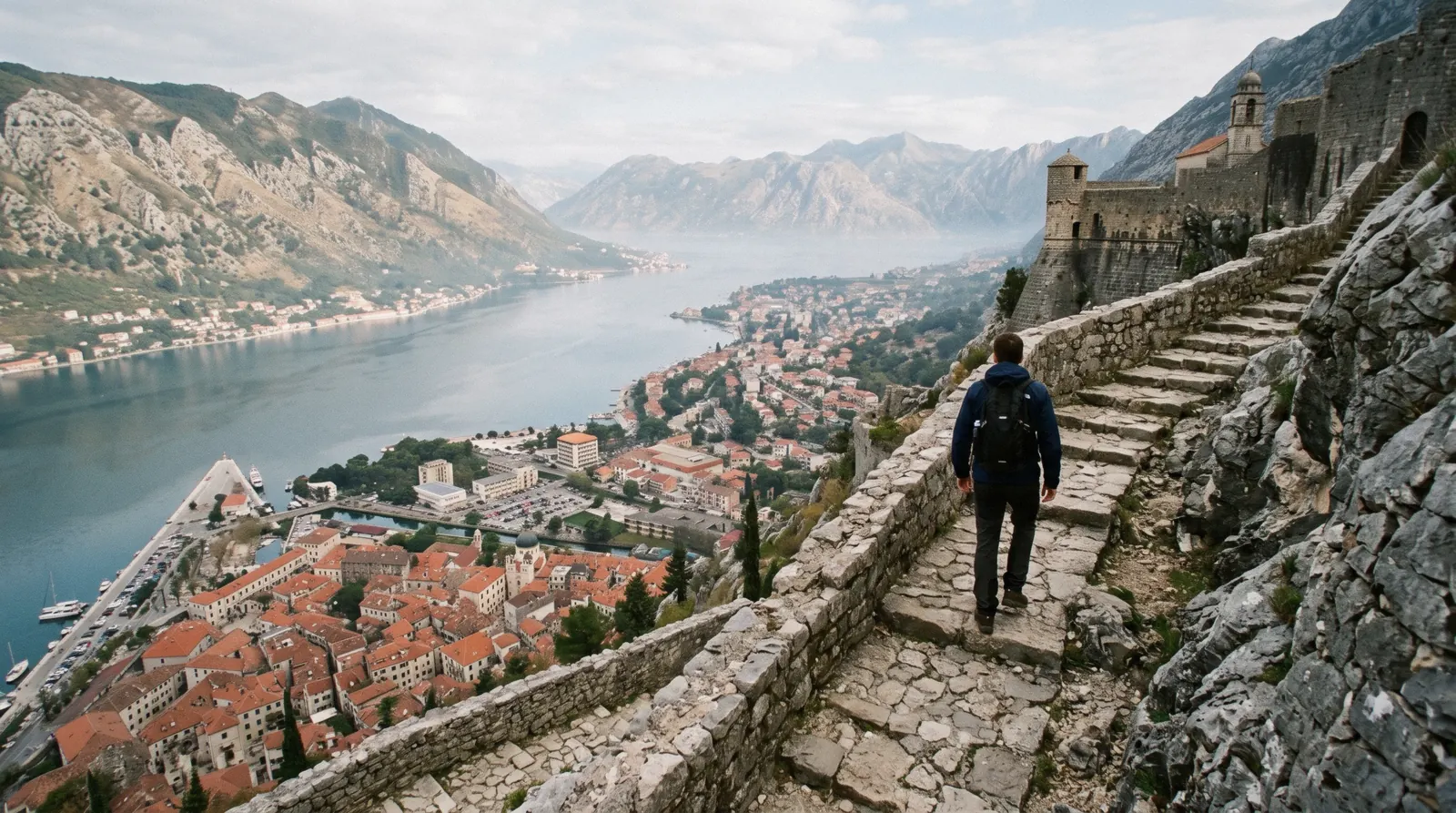
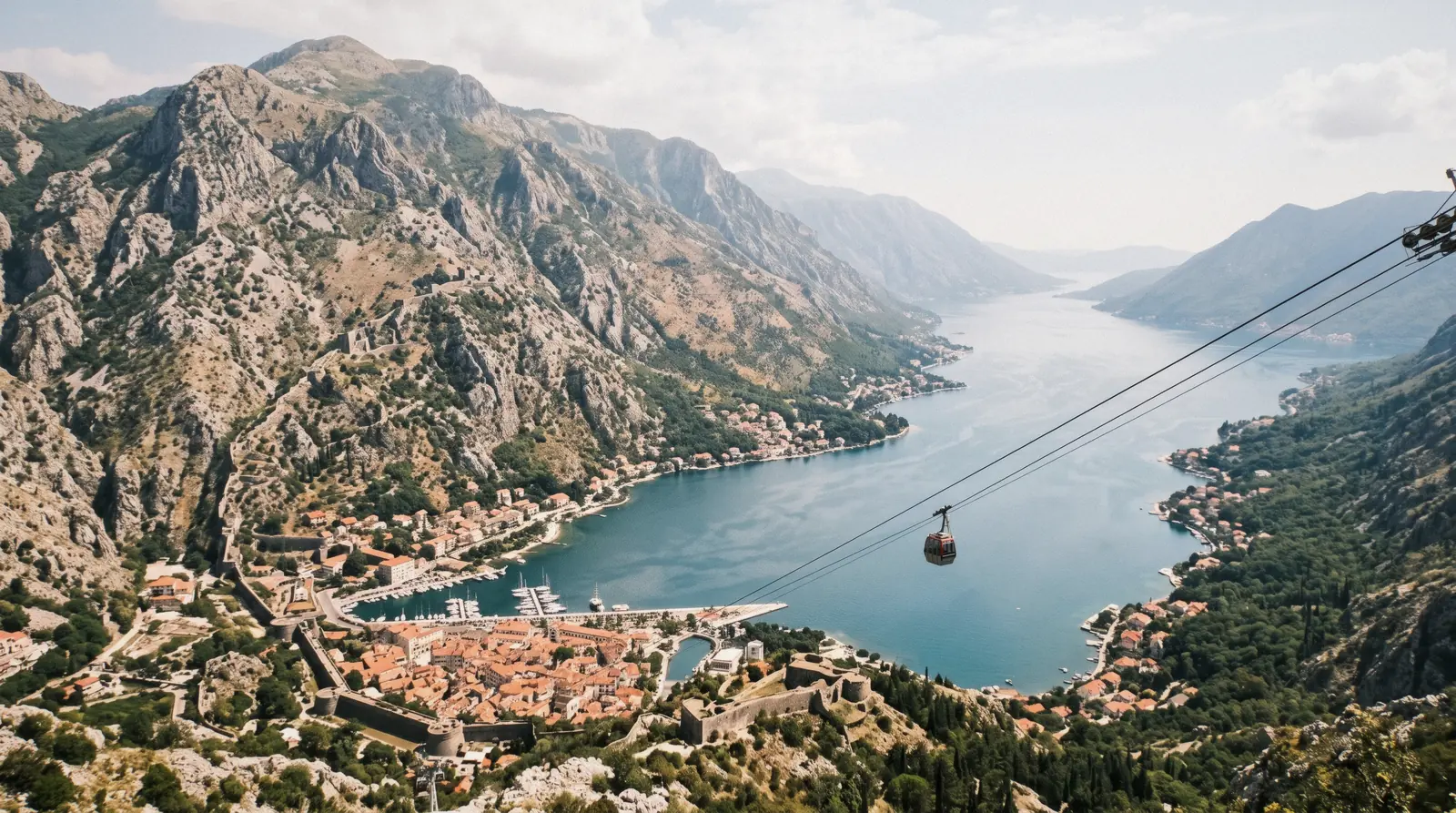
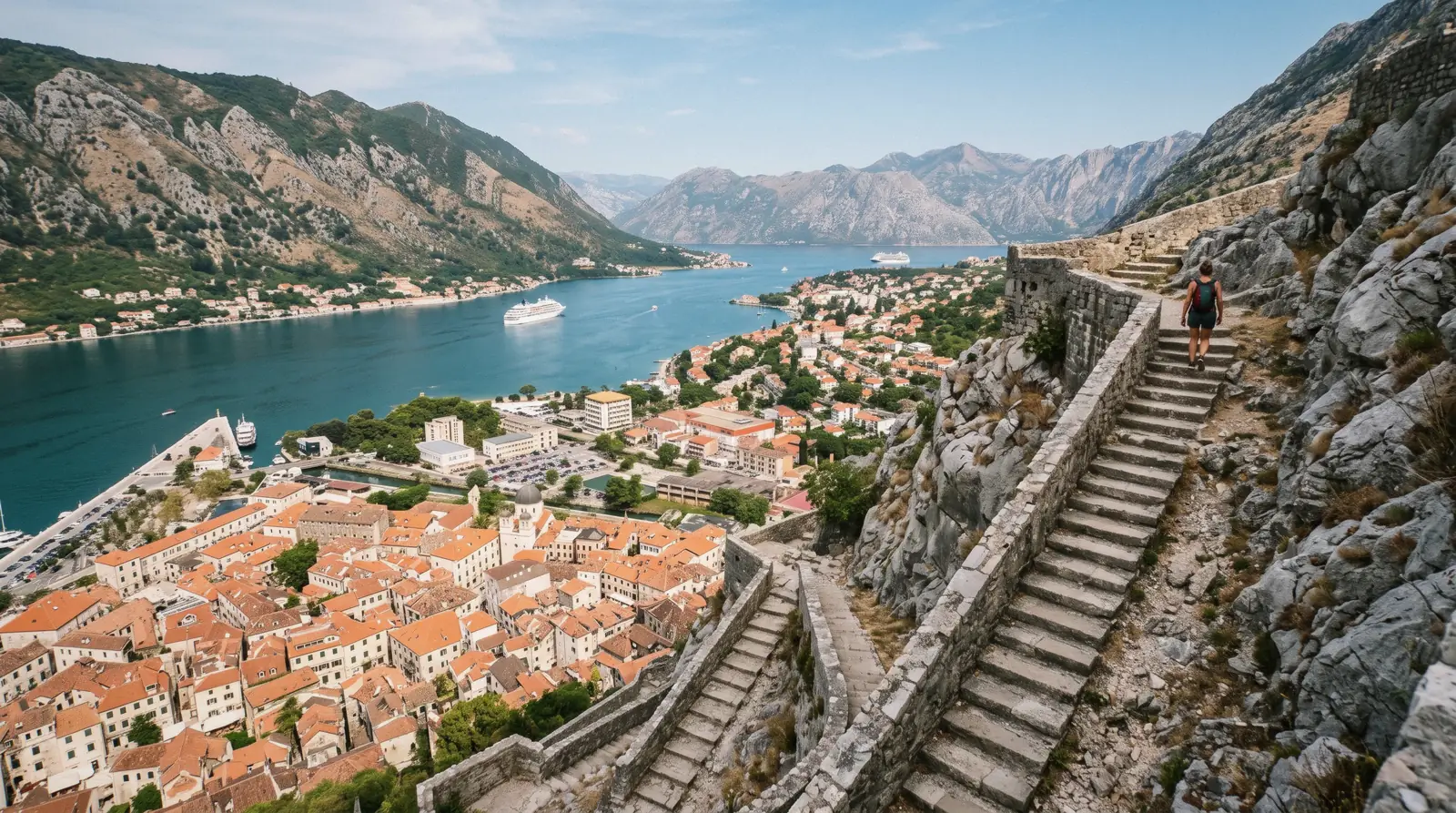
The north entrance by the ticket office starts the climb to San Giovanni fortress: about 1,350 stone steps, roughly 280 m of rise, 45-60 minutes up and about 30 down for anyone with average legs. The gate price is €15 ($17.12) in the main season with about €8 ($9.13) reported in winter, children under 12 free, cash or card accepted, and no official website publishes the tariff, so treat the gate as the source of truth. Entrances are staffed 07:00-20:00 in the main season.
Start at seven in summer: the walls have no shade, and by the time the ships disgorge, the steps are a queue. Everything about entrances, timing and the alternative trail is here: Kotor fortress.
 Kotor City Guide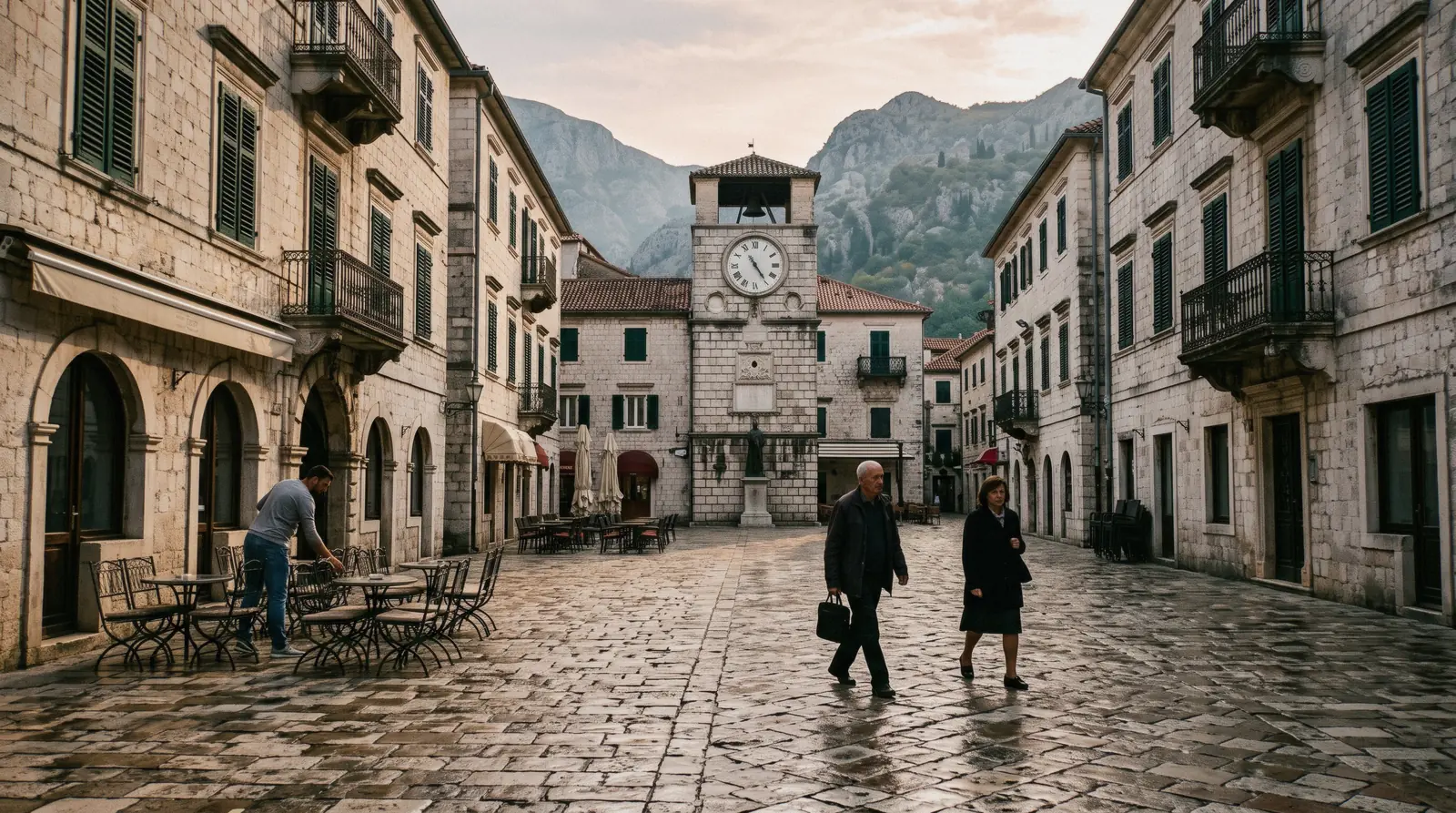

 from $63.00